A strong emergency pantry is not only about buying food. It is also about storing the right foods in the right way so they stay protected from moisture, pests, light, and oxygen exposure.
A DIY Mylar-lined long-term food storage bucket is one of the most common ways to store dry pantry staples like white rice, wheat berries, dry beans, and oats. The system uses a food-grade bucket for protection, a Mylar bag for an oxygen and light barrier, and oxygen absorbers to help reduce oxygen inside the sealed bag.
This method is best for dry, low-moisture foods only. It is not for wet foods, oily foods, brown rice, sugar, salt, or anything that needs refrigeration. When done properly, it can help organize emergency calories, reduce pest exposure, and make your pantry more resilient during outages, storms, and supply disruptions.
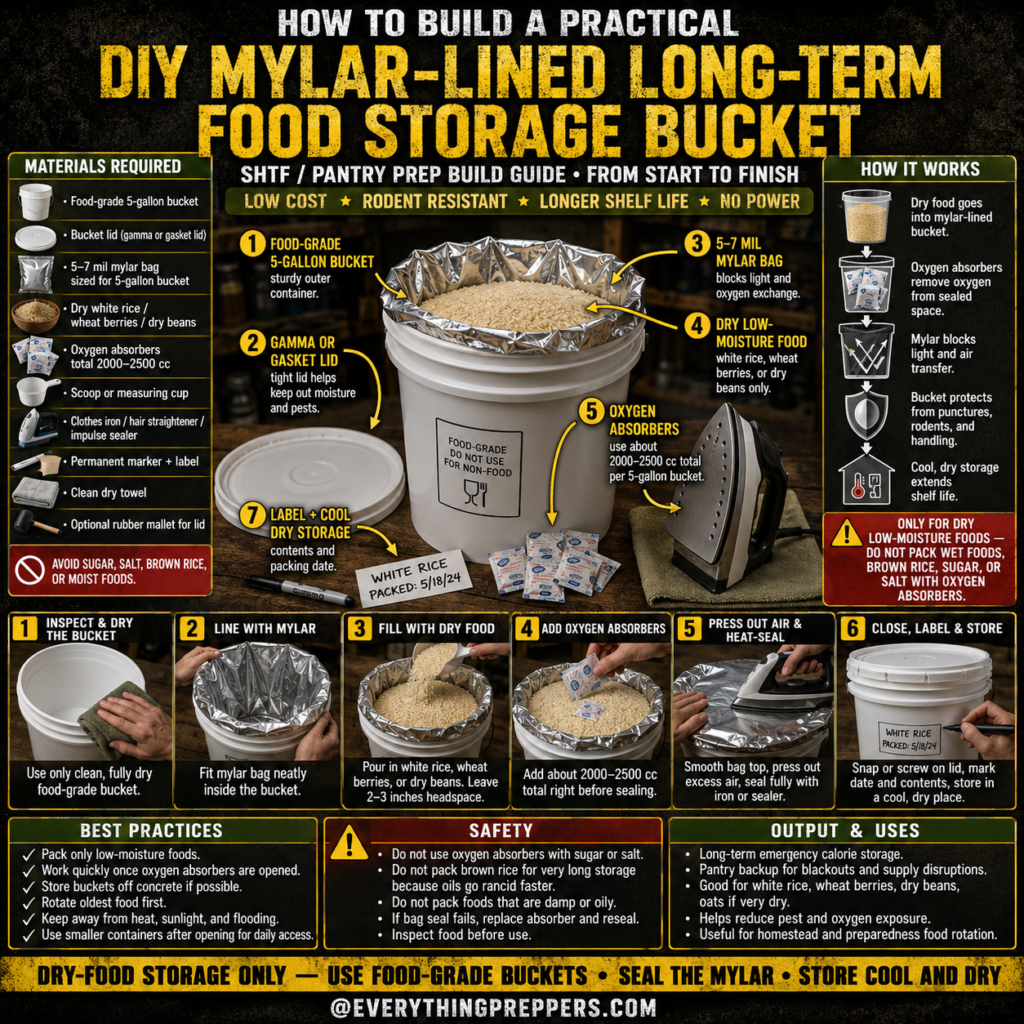
What Is a Mylar-Lined Food Storage Bucket?
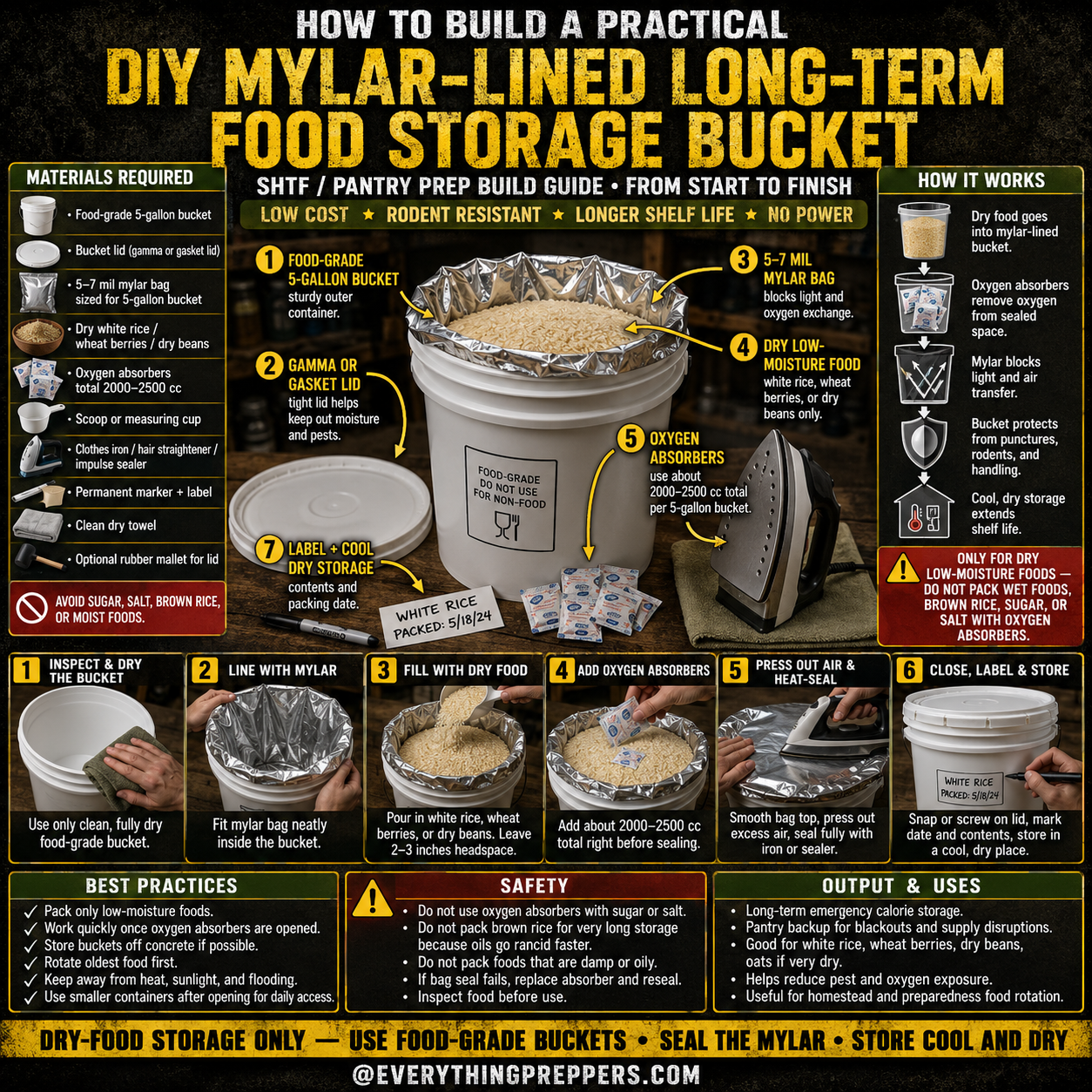
A Mylar-lined food storage bucket is a simple long-term dry-food storage system. The dry food goes into a Mylar bag, the Mylar bag sits inside a food-grade bucket, oxygen absorbers are added, and the bag is heat-sealed before the bucket lid is closed.
Each part has a job.
The food-grade bucket protects the food from punctures, rodents, stacking pressure, and handling damage. The Mylar bag helps block light and oxygen transfer. The oxygen absorbers remove oxygen from the sealed space inside the bag. The lid keeps the bucket closed and helps keep moisture and pests away.
This setup is useful for:
- Emergency pantry storage
- Long-term dry food storage
- Bulk rice storage
- Wheat berry storage
- Dry bean storage
- Homestead pantry organization
- Blackout and supply-disruption preparation
- Reducing pest and oxygen exposure
The key is choosing the right foods and keeping everything clean, dry, sealed, labeled, and stored in a cool place.
How This Storage Method Works
The system works by combining several layers of protection.
1. Dry Food Goes Into a Mylar-Lined Bucket
The Mylar bag is placed inside the bucket first. Then dry food is poured into the bag, leaving a few inches of headspace at the top.
2. Oxygen Absorbers Remove Oxygen
Oxygen absorbers are added right before sealing. They help remove oxygen from the sealed Mylar bag, which can slow oxidation and reduce insect activity.
3. Mylar Blocks Light and Oxygen Transfer
A good Mylar bag provides a stronger barrier than a regular plastic bag. A 5–7 mil bag is commonly used for bucket storage because it is thicker and more durable.
4. Bucket Protects the Bag
The bucket does not replace the Mylar bag. Its main job is physical protection. It helps prevent punctures, pests, crushing, and damage during storage.
5. Cool, Dry Storage Helps Shelf Life
Heat, moisture, sunlight, and flooding can shorten storage life. A cool, dry pantry area is much better than a hot garage or damp shed.
This method is simple, but details matter. Moisture is the biggest enemy of dry food storage.
Important Food Safety Warning
This bucket method is for dry, low-moisture foods only.
Do not use oxygen absorbers with foods that are damp, oily, or unsuitable for oxygen-free storage. Do not use this method for wet foods, fresh foods, cooked foods, meat, dairy, vegetables with moisture, or anything that belongs in a refrigerator or freezer.
Avoid packing:
- Sugar with oxygen absorbers
- Salt with oxygen absorbers
- Brown rice for very long storage
- Wet or damp foods
- Oily foods
- Foods with unknown moisture content
- Foods with strong odors or contamination
- Opened foods that may already contain pests or moisture
If food is damp, smells strange, has visible mold, has insects, or the packaging looks suspicious, do not store it for long-term use.
Materials Needed
You only need a few core supplies to build one bucket.
Basic Materials
- Food-grade 5-gallon bucket
- Bucket lid, such as a gamma lid or gasket lid
- 5–7 mil Mylar bag sized for a 5-gallon bucket
- Dry white rice, wheat berries, dry beans, or very dry oats
- Oxygen absorbers, usually around 2,000–2,500 cc total for a 5-gallon bucket
- Scoop or measuring cup
- Clothes iron, hair straightener, or impulse sealer
- Permanent marker and label
- Clean dry towel
- Optional rubber mallet for lid installation
Use only clean, dry food-grade buckets. Do not use buckets that previously held chemicals, paint, fuel, cleaners, pesticides, or unknown materials.
Best Foods for Mylar Bucket Storage
This storage method works best with dry pantry staples that are naturally low in moisture and low in fat.
Good options include:
- White rice
- Wheat berries
- Dry beans
- Lentils
- Split peas
- Very dry oats
- Pasta
- Dehydrated vegetables, if fully dry
- Dry corn
- Dry grains
White rice and wheat berries are popular because they are low in fat and store better than many other staples when kept dry and sealed.
Brown rice is different because it contains more natural oils. Those oils can go rancid faster, so brown rice is not ideal for very long storage.
Foods to Avoid in This Setup
Some foods are not good choices for oxygen absorber storage.
Do Not Store Sugar With Oxygen Absorbers
Sugar can harden into a solid brick when oxygen absorbers are used. Sugar stores well in sealed containers without oxygen absorbers if it is kept dry.
Do Not Store Salt With Oxygen Absorbers
Salt does not need oxygen absorbers and can clump if moisture is present. Keep it dry in a sealed container.
Avoid Brown Rice for Very Long Storage
Brown rice contains oils that can turn rancid over time. White rice is usually better for long-term storage.
Avoid Damp or Oily Foods
Moisture and oil can create spoilage problems. Only store foods that are dry and appropriate for this method.
Step-by-Step Build Guide
Step 1: Inspect and Dry the Bucket
Start with a clean, fully dry food-grade bucket. Wipe the inside with a clean dry towel and inspect it carefully.
Check for:
- Dirt
- Moisture
- Cracks
- Strong odors
- Old residue
- Sharp edges
- Insect activity
The bucket should be completely dry before you add the Mylar bag. Even a small amount of moisture can create problems during long-term storage.
Step 2: Line the Bucket With Mylar
Open the Mylar bag and place it inside the bucket. Press the bag down gently so it fits neatly against the bottom and sides.
Fold the top edge of the bag over the bucket rim while filling. This keeps the bag open and makes it easier to pour food without spilling.
Be careful not to puncture the Mylar bag. Keep sharp tools, rough edges, and screws away from the bag.
Step 3: Fill With Dry Food
Pour your dry food into the Mylar bag. Leave about 2–3 inches of headspace at the top so you have enough room to seal the bag.
Do not overfill. If the bag is packed too high, sealing becomes difficult and the bag may not close properly.
Use only dry food. If you are filling several buckets, work with one food type at a time to avoid confusion.
Good labels to prepare:
- White rice
- Wheat berries
- Pinto beans
- Black beans
- Lentils
- Oats
Step 4: Add Oxygen Absorbers
Add oxygen absorbers right before sealing the bag. Do not open the absorber package early and leave them exposed to air for a long time.
For a 5-gallon bucket, many people use around 2,000–2,500 cc total oxygen absorber capacity, depending on the food, bag size, and headspace.
Once oxygen absorbers are opened:
- Work quickly.
- Use what you need.
- Reseal unused absorbers in an airtight jar or vacuum-sealed bag if appropriate.
- Do not use absorbers that are hard, expired, or questionable.
Place the absorber packets on top of the food inside the Mylar bag.
Step 5: Press Out Air and Heat-Seal
Smooth the top of the Mylar bag and press out excess air. Then heat-seal the bag using a clothes iron, hair straightener, or impulse sealer.
A good method is to seal most of the top edge first, leaving a small gap. Press out extra air through the gap, then finish sealing.
After sealing, inspect the seam carefully. It should be continuous with no holes, wrinkles, or gaps.
If the seal fails, reseal it before closing the bucket.
Step 6: Close, Label, and Store
After the Mylar bag is sealed, close the bucket with a gasket lid or gamma lid. Use a rubber mallet if needed to seat a standard gasket lid.
Label the bucket clearly.
Include:
- Food type
- Packed date
- Approximate weight or amount
- Oxygen absorbers used
- Any special notes
Store the bucket in a cool, dry place away from heat, sunlight, pests, and flooding.
Best Practices for Long-Term Dry Food Storage
A bucket is only as good as the storage conditions around it.
Use these best practices:
- Pack only dry, low-moisture foods.
- Work quickly after oxygen absorbers are opened.
- Use food-grade buckets.
- Use thick Mylar bags.
- Store buckets off concrete if possible.
- Keep buckets away from heat and sunlight.
- Avoid flood-prone storage areas.
- Rotate oldest food first.
- Use smaller containers after opening for daily access.
- Inspect food before use.
If you open a large bucket, consider moving some food into smaller kitchen containers and resealing the rest if needed.
Common Mistakes to Avoid
Mistake 1: Using Non-Food Buckets
Buckets that held chemicals or unknown products are not safe for food storage. Use food-grade buckets only.
Mistake 2: Storing Damp Food
Moisture can cause spoilage, mold, and unsafe conditions. Only store dry foods.
Mistake 3: Using Oxygen Absorbers With Sugar or Salt
Sugar and salt do not need oxygen absorbers. Sugar can harden badly if absorbers are used.
Mistake 4: Forgetting to Label the Bucket
Unlabeled buckets create confusion. Label every bucket before storage.
Mistake 5: Storing Buckets in Hot Areas
Heat shortens shelf life. Avoid hot garages, sheds, attics, and direct sun.
Mistake 6: Assuming the Bucket Alone Is Enough
A plastic bucket alone does not provide the same oxygen and light barrier as Mylar. Use both for better protection.
Safety Notes
Food storage should be clean, dry, and organized.
Follow these safety rules:
- Use food-grade buckets only.
- Do not pack wet or oily foods.
- Do not use oxygen absorbers with sugar or salt.
- Do not pack brown rice for very long storage.
- Keep oxygen absorbers away from children and pets.
- Inspect food before cooking or eating.
- Discard food that smells bad, looks moldy, has insects, or seems unsafe.
- Keep buckets away from chemicals, fuel, and cleaning products.
- Do not store buckets where flooding is possible.
- Wash hands and use clean tools when packing.
If a bucket smells strange when opened, do not ignore it. Food should smell normal for that product.
How to Tell if the Seal Worked
After several hours or a day, the Mylar bag may appear tighter around the food as oxygen is absorbed. However, not every properly sealed bag becomes brick-hard. Some foods leave air spaces that prevent a fully tight look.
Check for:
- Solid continuous heat seal
- No visible holes
- No open corners
- No punctures
- No loose unsealed sections
- No strange smells
- No moisture inside the bag
The seal quality matters more than whether the bag looks perfectly vacuum-packed.
Where to Store the Buckets
The best storage location is cool, dry, dark, and stable.
Good locations include:
- Pantry
- Basement shelf, if dry
- Interior closet
- Cool storage room
- Under-bed storage area
- Dedicated emergency pantry
Avoid:
- Hot attic
- Damp basement floor
- Outdoor shed
- Garage with extreme heat
- Direct sunlight
- Flood-prone areas
- Areas near chemicals or fuel
Store buckets on shelves, boards, or pallets if the floor may get damp.
Output and Uses
A Mylar-lined food storage bucket can help with:
- Long-term emergency calorie storage
- Pantry backup during blackouts
- Supply disruption preparation
- Bulk rice and bean storage
- Homestead pantry rotation
- Reducing pest exposure
- Organizing dry staples
This is one of the most practical systems for storing large amounts of dry food in a compact way.
Final Thoughts
A DIY Mylar-lined long-term food storage bucket is a simple and effective way to protect dry pantry staples. With a food-grade bucket, thick Mylar bag, oxygen absorbers, and a good seal, you can store foods like white rice, wheat berries, dry beans, and lentils more safely and neatly.
The most important rules are simple: use dry low-moisture foods, seal the Mylar properly, label everything, and store buckets in a cool, dry place.
This system is not for every food. Avoid sugar, salt, brown rice, wet foods, and oily foods with oxygen absorbers. But for the right dry staples, it can be a valuable part of a long-term emergency pantry.
Preparedness starts with food you can trust, find, rotate, and use when needed.
Frequently Asked Questions
What foods are best for Mylar bucket storage?
White rice, wheat berries, dry beans, lentils, split peas, pasta, and very dry oats are common choices.
Can I store brown rice this way?
Brown rice is not ideal for very long storage because it contains oils that can turn rancid faster than white rice.
Should I use oxygen absorbers with sugar?
No. Sugar does not need oxygen absorbers and can harden into a solid block if they are used.
Should I use oxygen absorbers with salt?
No. Salt does not need oxygen absorbers. Keep it dry in a sealed container.
Do I need a food-grade bucket if I use Mylar?
Yes, it is best to use food-grade buckets. The bucket protects the Mylar bag and helps keep pests, punctures, and damage away.
How much oxygen absorber should I use?
For a 5-gallon bucket, many people use around 2,000–2,500 cc total oxygen absorber capacity, depending on the food and headspace.
Does the Mylar bag need to look vacuum-packed?
Not always. Some sealed bags become tight, while others do not look fully vacuum-packed. The key is a strong seal and proper oxygen absorber use.
Where should I store the buckets?
Store them in a cool, dry, dark place away from heat, sunlight, flooding, pests, fuel, and chemicals.