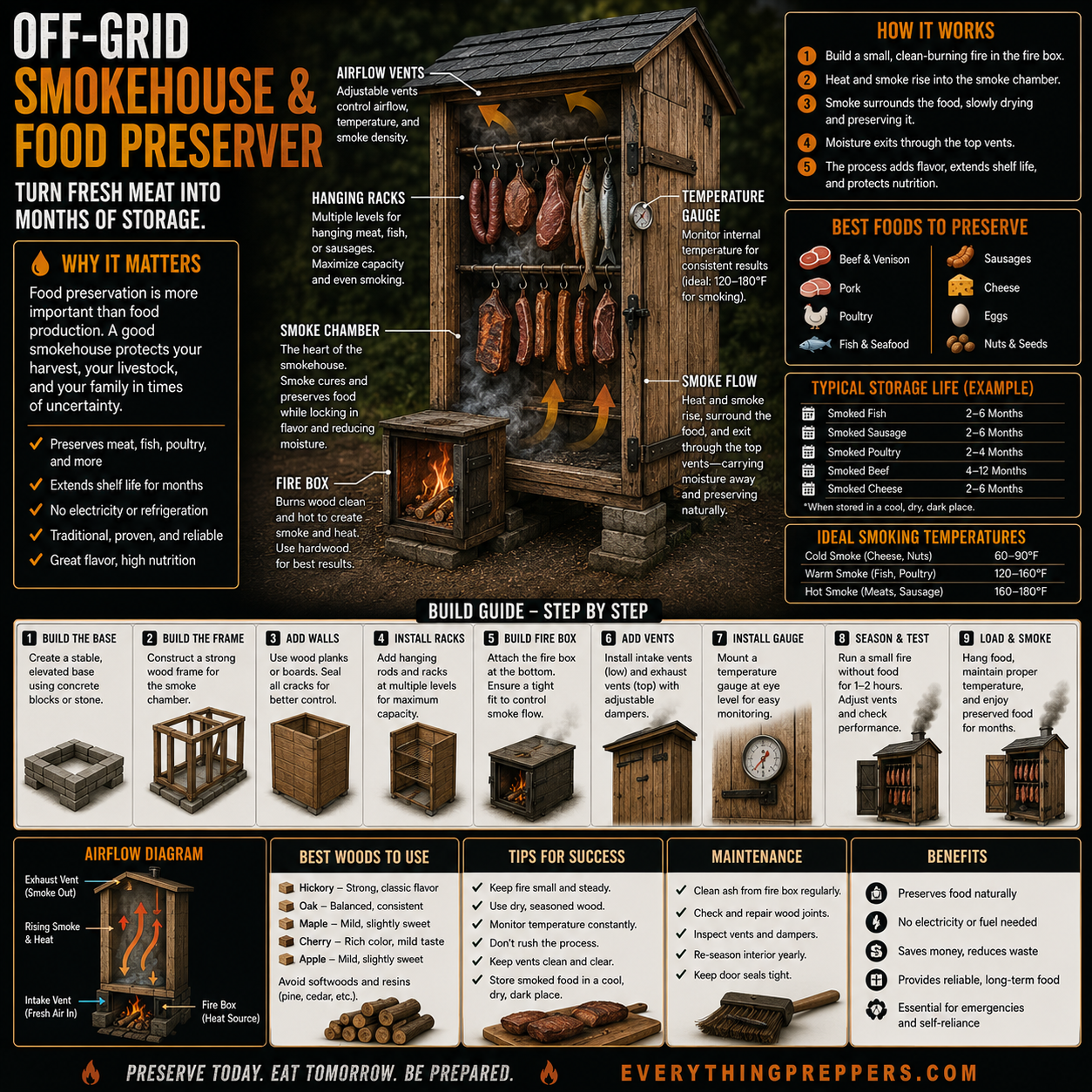
Food preservation is one of the oldest survival skills, and smoking is one of the most useful methods to understand. Long before refrigerators and freezers, people used smoke, salt, heat, airflow, and drying to help preserve meat, fish, and other foods.
An off-grid smokehouse can be a practical tool for homesteaders, hunters, gardeners, and preppers who want to learn traditional food preservation skills. It can add flavor, reduce moisture, and support longer storage when used correctly.
However, smoking food is not something to guess at. Meat, poultry, fish, and other high-risk foods must be handled safely, cooked or cured properly, monitored with temperature, and stored correctly. A smokehouse can be useful, but it must be built and used with care.
This guide explains how an off-grid smokehouse works, what parts it needs, how to build one, and the most important safety rules to follow.
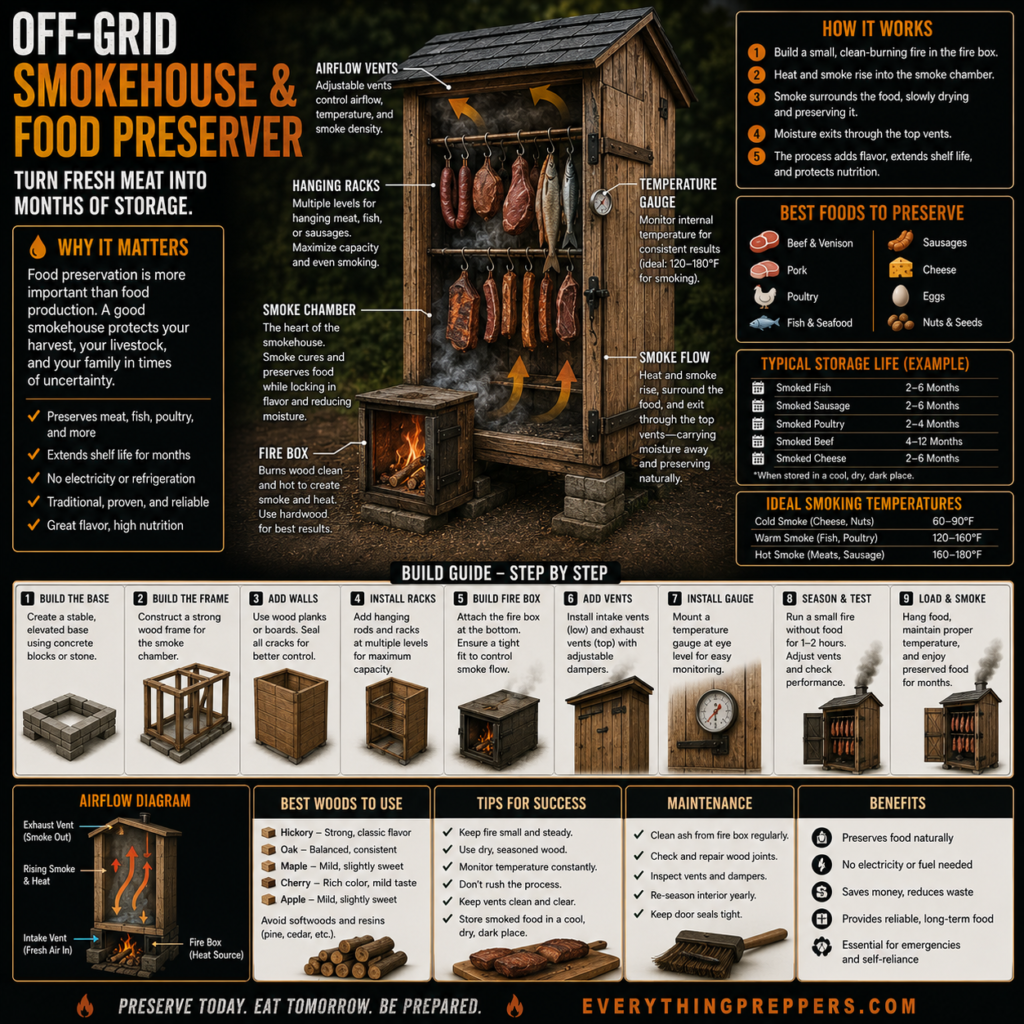
What Is an Off-Grid Smokehouse?
An off-grid smokehouse is a small structure used to expose food to controlled smoke, heat, and airflow. The smoke usually comes from a separate fire box or lower fire chamber. The food hangs or rests on racks inside the smoke chamber while warm smoke moves around it and exits through vents.
A basic smokehouse can be used for:
- Smoked fish
- Smoked sausages
- Smoked beef or venison
- Smoked pork
- Smoked poultry
- Smoked cheese
- Smoked nuts or seeds
- Flavoring and drying suitable foods
The main purpose depends on the smoking method. Some smoking is mainly for flavor. Some methods also reduce moisture. Some require curing and careful temperature control for safer preservation.
How a Smokehouse Works
A smokehouse works by moving smoke and warm air around food in a controlled chamber.
1. The Fire Box Creates Smoke and Heat
A small, clean-burning fire produces smoke and warmth. Dry seasoned hardwood is usually used because it creates better smoke than wet or resinous wood.
2. Smoke Enters the Smoke Chamber
The smoke travels from the fire box into the chamber where the food is hanging.
3. Smoke Surrounds the Food
Smoke moves around the food, adding flavor while helping reduce surface moisture.
4. Moisture Leaves Through Vents
Top vents allow smoke and moisture to escape. This keeps the chamber from becoming too damp.
5. Temperature Must Be Monitored
A thermometer helps track the internal chamber temperature. Smoking results depend heavily on temperature, airflow, food thickness, curing method, and time.
A smokehouse is not just a box with smoke inside. It needs controlled airflow and consistent temperature.
Important Food Safety Warning
Smoking food can be unsafe if done incorrectly. Smoke alone does not automatically make food shelf-stable.
To use a smokehouse safely:
- Use tested recipes and trusted preservation methods.
- Keep raw meat, poultry, and fish cold before smoking.
- Cure foods properly when the recipe requires it.
- Use a thermometer to monitor chamber temperature.
- Use a food thermometer to verify safe internal temperature when needed.
- Store finished smoked foods correctly.
- Do not guess storage life.
- Discard food that smells bad, feels slimy, grows mold, or seems unsafe.
Cold smoking, warm smoking, and hot smoking are different methods. They are not interchangeable. Some smoked foods still require refrigeration or freezing after smoking.
When in doubt, treat smoked food as perishable.
Main Parts of a Smokehouse
A practical smokehouse has several key parts.
Fire Box
The fire box burns wood and creates smoke. A separate fire box makes it easier to control heat and smoke flow.
Smoke Chamber
The smoke chamber is the main cabinet where food hangs or sits on racks.
Hanging Racks
Rods, hooks, and racks hold meat, fish, sausages, or other foods so smoke can move around them evenly.
Airflow Vents
Adjustable vents help control airflow, smoke density, and moisture. Intake vents bring air in. Exhaust vents let smoke and moisture out.
Temperature Gauge
A temperature gauge helps monitor the smoke chamber. For serious food safety, a separate food thermometer is also important.
Door and Seals
A door allows access to the food. Seals should be tight enough to control smoke but not so tight that airflow stops completely.
Materials Needed
The exact materials depend on your design, but a small smokehouse may use:
- Concrete blocks or stone for base
- Lumber or wood framing
- Wood planks or exterior boards
- Hinges and latch
- Hanging rods, hooks, or food-safe racks
- Fire box or small stove-style box
- Metal duct or smoke connection if using offset fire box
- Adjustable vents or dampers
- Temperature gauge
- Screws or fasteners
- Heat-safe sealant where appropriate
- Roofing material
- Dry seasoned hardwood for smoking
Use materials that are safe near heat and smoke. Avoid painted, chemically treated, glued, or resinous materials inside the smoke chamber where food is exposed.
Best Woods for Smoking
The wood you use affects both flavor and safety.
Common smoking woods include:
- Hickory
- Oak
- Maple
- Cherry
- Apple
Avoid softwoods and resinous woods such as pine, cedar, fir, or spruce. These can create harsh smoke and unwanted residues.
Use dry, seasoned hardwood. Wet wood can create heavy, dirty smoke and poor results.
Step-by-Step Build Guide
Step 1: Build the Base
Start with a stable, level base. Concrete blocks, stone, or a firm raised platform can help keep the smokehouse off damp ground.
The base should support the full weight of the structure and keep it stable during use. Choose a location away from buildings, dry brush, low branches, fences, and flammable materials.
A good smokehouse site should be:
- Level
- Well-drained
- Away from structures
- Away from dry vegetation
- Easy to monitor
- Safe for fire use
- Protected from strong wind when possible
Step 2: Build the Frame
Construct a strong frame for the smoke chamber. The frame should be square, sturdy, and tall enough for hanging food with space around each piece.
Leave enough room inside for racks, airflow, and cleaning. Do not crowd the chamber. Food needs space so smoke can move evenly around it.
A simple rectangular frame is easiest for beginners.
Step 3: Add the Walls
Add wood planks or boards to enclose the smoke chamber. Seal large cracks so smoke can be controlled, but do not block all airflow.
The chamber should hold smoke while still allowing moisture and heat to move through the vents.
Avoid using unsafe interior finishes. Do not paint or coat the inside with anything that could release fumes or contact food smoke.
Step 4: Install Racks and Hanging Rods
Install multiple levels of rods, hooks, or racks inside the chamber. Food should hang with space between pieces.
Good rack design should allow:
- Even smoke exposure
- Easy loading
- Easy cleaning
- Strong support
- Enough spacing between foods
- Good airflow from bottom to top
Use food-safe metal where possible. Avoid rusty, painted, or unknown metal surfaces that may contact food.
Step 5: Build or Attach the Fire Box
The fire box should create smoke and heat without allowing flames to directly contact the food.
Many smokehouses use a separate lower or offset fire box. This helps control heat and reduces direct flame exposure.
The fire box should be:
- Stable
- Heat-resistant
- Easy to clean
- Easy to control
- Connected safely to the smoke chamber
- Far enough from wood parts to reduce fire risk
Keep the fire small and steady. A smokehouse usually works better with controlled smoke than with large flames.
Step 6: Add Vents
Install intake vents near the lower area and exhaust vents near the top. Adjustable dampers are useful because they let you control airflow.
Vents help with:
- Smoke movement
- Temperature control
- Moisture removal
- Fire control
- Smoke density
If smoke is trapped too heavily, food may taste bitter and moisture may not escape properly. If airflow is too strong, heat and smoke may leave too quickly.
Step 7: Install a Temperature Gauge
Mount a temperature gauge at eye level or near the main food area so you can monitor chamber temperature easily.
A chamber thermometer is useful, but it does not replace checking internal food temperature when food safety requires it.
Use a food thermometer for meat, poultry, and fish when needed.
Step 8: Season and Test the Smokehouse
Before smoking food, run a small fire without food inside. This helps test airflow, burn off construction dust, and reveal leaks or hot spots.
During the test:
- Watch smoke flow.
- Check vent control.
- Monitor temperature.
- Look for overheating wood.
- Check for smoke leaks.
- Make sure the fire box is safe.
- Adjust vents as needed.
Do not load food until you understand how the smokehouse behaves.
Step 9: Load and Smoke
Once the smokehouse is tested, load food according to a safe recipe or preservation method.
Keep pieces spaced apart. Maintain the proper temperature range for the food and method you are using. Monitor the process regularly.
Do not rush. Smoking can take hours or longer depending on the food, thickness, cure, temperature, and desired result.
After smoking, store the food safely based on the recipe. Some smoked foods are shelf-stable only when properly cured, dried, and stored. Others must still be refrigerated.
Cold Smoking vs. Hot Smoking
Understanding smoking temperature matters.
Cold Smoking
Cold smoking is usually used for flavor and certain cured foods. It is done at lower temperatures and requires strict food-safety control. It is not safe for beginners to improvise with raw meat or fish.
Warm Smoking
Warm smoking uses moderate heat and may dry or flavor foods. It still requires careful temperature management and proper storage.
Hot Smoking
Hot smoking uses higher temperatures and can cook certain foods while adding smoke flavor. Even then, internal food temperature and safe storage matter.
Do not mix these methods casually. Use tested instructions for the specific food.
Best Foods to Smoke
Smokehouses are commonly used for:
- Beef
- Venison
- Pork
- Poultry
- Fish
- Sausages
- Cheese
- Eggs
- Nuts and seeds
Some foods are easier than others. Beginners may want to start with lower-risk projects like smoked nuts, smoked cheese, or fully cooked foods before attempting meat preservation.
For meat and fish, follow trusted curing and smoking guidance.
Best Practices for Success
Use these best practices:
- Keep the fire small and steady.
- Use dry, seasoned hardwood.
- Monitor temperature constantly.
- Do not rush the process.
- Keep vents clean and clear.
- Keep food spaced apart.
- Use a thermometer instead of guessing.
- Clean ash from the fire box regularly.
- Store smoked food in a cool, dry place when appropriate.
- Refrigerate smoked foods that are not shelf-stable.
Good smoke should be controlled and steady, not thick, dirty, and overpowering.
Common Mistakes to Avoid
Mistake 1: Using the Wrong Wood
Softwoods and resinous woods can create unpleasant smoke and residues. Use suitable hardwoods.
Mistake 2: Smoking Without Temperature Control
Temperature affects food safety and quality. Always monitor the chamber and food temperature.
Mistake 3: Crowding the Chamber
Food needs airflow. Crowding can create uneven smoking and moisture problems.
Mistake 4: Treating All Smoked Food as Shelf-Stable
Not all smoked food can be stored at room temperature. Many smoked foods still require refrigeration or freezing.
Mistake 5: Using Unsafe Materials
Avoid treated wood, painted surfaces, chemical containers, and unknown materials inside the smoke path.
Mistake 6: Leaving the Fire Unattended
A smokehouse uses fire. Stay nearby and monitor the process.
Safety Notes
A smokehouse involves fire, heat, food safety, and outdoor structures.
Follow these safety rules:
- Build away from flammable structures and dry brush.
- Keep a fire extinguisher, water, or sand nearby.
- Do not leave the fire unattended.
- Use safe smoking woods only.
- Do not use treated or painted wood inside the smoke path.
- Keep children and pets away from the fire box.
- Monitor chamber temperature.
- Use tested recipes for meat and fish.
- Store finished food correctly.
- Clean grease, ash, and buildup regularly.
If the smokehouse smells chemical, burns too hot, leaks excessively, or becomes unstable, stop using it until fixed.
Maintenance Checklist
Regular maintenance keeps the smokehouse safer and more useful.
Check:
- Fire box ash buildup
- Vent openings
- Door seals
- Hinges and latch
- Hanging rods and racks
- Interior residue
- Roof leaks
- Wood joints
- Pest activity
- Temperature gauge accuracy
Clean ash after use. Keep vents clear. Re-season or clean the interior as needed. Repair cracks and loose boards before the next smoking session.
Output and Uses
A well-built smokehouse can help with:
- Food flavoring
- Meat and fish preservation when done correctly
- Off-grid food processing
- Homestead food storage
- Hunting and fishing harvest use
- Reducing waste
- Emergency food preparation skills
- Long-term self-reliance practice
It is a valuable skill-building project, but it must be paired with proper food safety.
Final Thoughts
An off-grid smokehouse is a powerful traditional food-preservation tool when built and used correctly. It can help add flavor, reduce moisture, and support longer storage for certain foods.
The build itself is straightforward: create a stable base, build a smoke chamber, add racks, connect a fire box, install vents, add a temperature gauge, test the smoke flow, and only then load food.
The most important rule is safety. Smoking is not magic preservation. Use the right wood, control temperature, follow tested food methods, and store finished food properly.
For homesteaders, hunters, and preppers, learning to smoke food safely is a valuable step toward a more resilient pantry.
Frequently Asked Questions
Does smoking meat make it shelf-stable?
Not always. Many smoked meats still require refrigeration or freezing. Shelf-stable smoked meat usually requires proper curing, drying, smoking, and safe storage.
What wood should I use for smoking?
Hickory, oak, maple, cherry, and apple are common smoking woods. Avoid softwoods and resinous woods like pine or cedar.
Do I need a thermometer?
Yes. A smokehouse should have a chamber thermometer, and meat or fish should be checked with a food thermometer when safety requires it.
Can I use treated lumber?
Do not use treated, painted, or chemically contaminated wood inside the smoke path or where it may affect food.
What temperature is best for smoking?
It depends on the method and food. Cold smoking, warm smoking, and hot smoking use different temperature ranges. Follow tested recipes.
Can I smoke cheese in this?
Yes, but cheese is usually cold-smoked at low temperatures so it does not melt. It requires careful temperature control.
How often should I clean the smokehouse?
Remove ash after use, keep vents clear, and inspect racks, seals, and buildup regularly.
Is this safe during windy weather?
Strong wind can make fire and smoke control harder. Use caution, protect the fire box, and avoid smoking during unsafe fire conditions.