Most preparedness plans focus on stored food, bottled water, flashlights, batteries, and backup power.
Those supplies matter. But there is another preparedness skill that is often overlooked: learning which useful foods grow naturally in your local area.
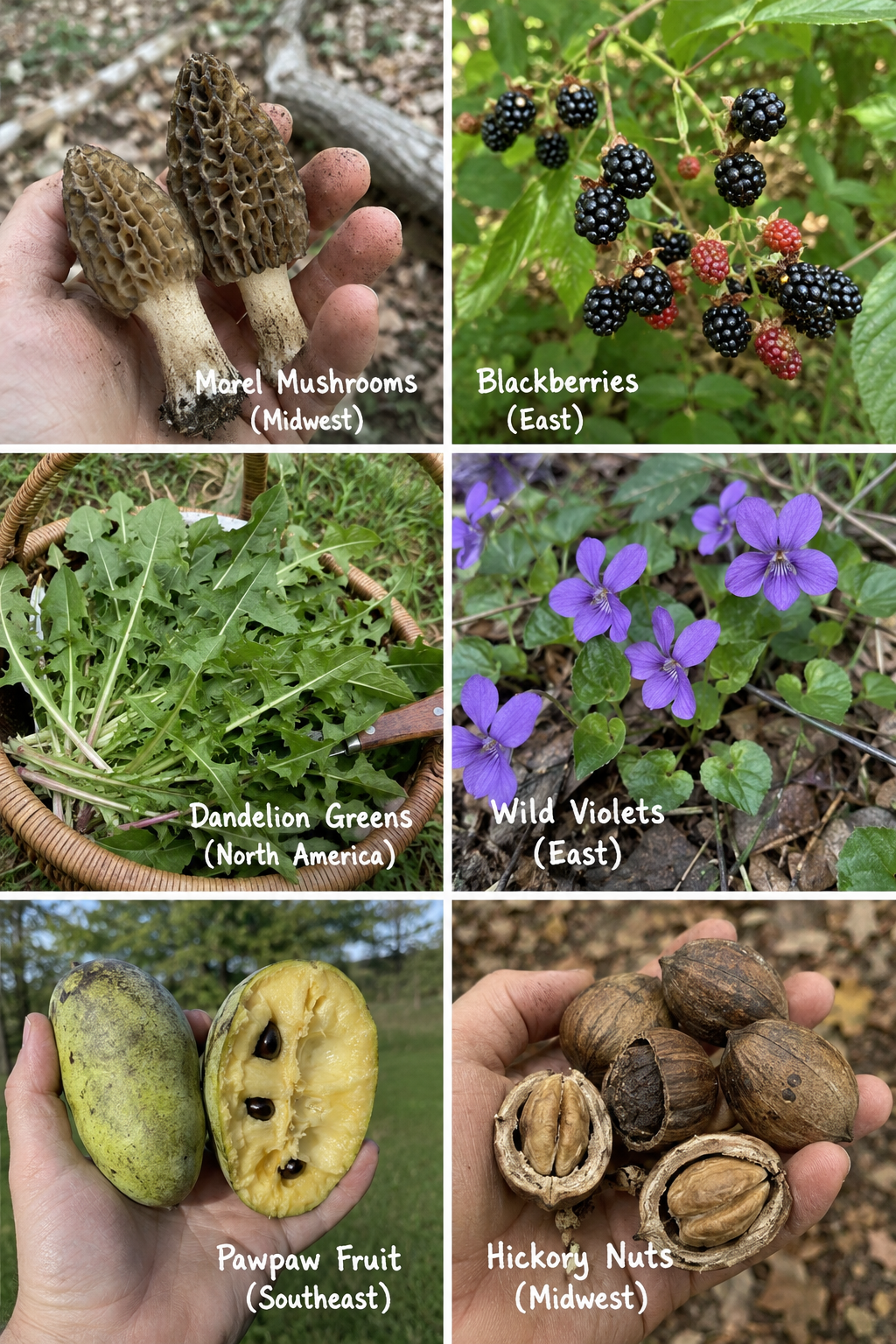
Wild berries, nuts, greens, fruits, roots, seeds, and fungi may be found in forests, fields, coastlines, vacant lots, farms, and even ordinary backyards. However, foraging is not as simple as finding a plant that looks familiar and tasting it.
Some poisonous plants closely resemble edible species. Certain plants are safe only in specific seasons or after careful preparation. One part of a plant may be edible while another part is harmful. Wild mushrooms present an especially serious risk because toxic and edible varieties can look remarkably similar. Poison Control advises people not to eat wild mushrooms unless an expert has identified them, and the FDA likewise recommends consulting a knowledgeable expert before consuming wild fungi.
Foraging should therefore be treated as a skill to learn slowly—not as a desperate experiment to begin after an emergency has already started.
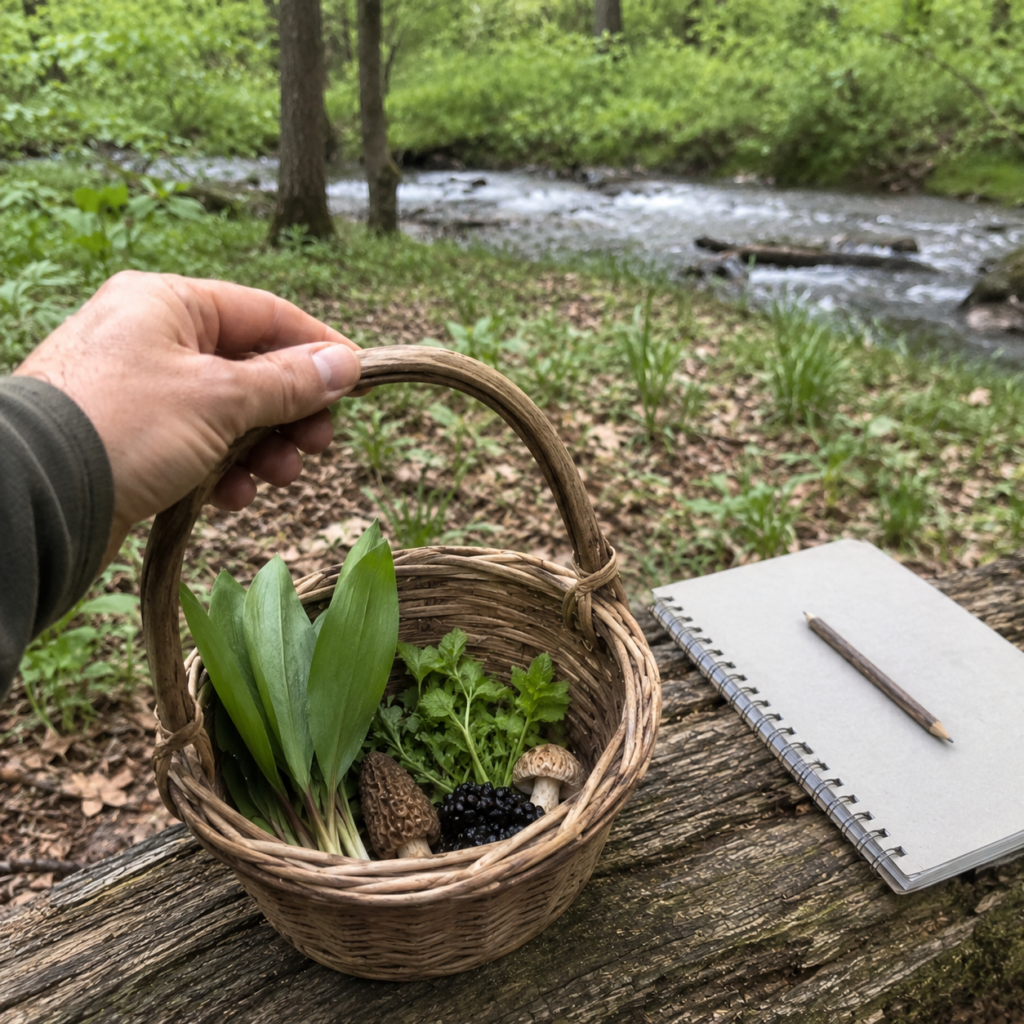
Foraging Is a Skill, Not a Backup Pantry
Knowing about wild food can strengthen a preparedness plan, but it should not replace stored food.
Wild harvests are seasonal and unpredictable. Drought, flooding, wildfire, insects, development, overharvesting, and competition from wildlife can reduce what is available. A plant that grows abundantly in spring may be difficult to recognize or completely absent in winter.
Foraging is most useful as a supplemental skill. It can help you:
- Recognize useful plants already growing nearby
- Add seasonal variety to stored meals
- Learn more about your local environment
- Identify dangerous plants around your property
- Harvest certain foods during normal times
- Develop knowledge that may be useful during extended disruptions
The real value is not simply collecting free food. It is understanding the land around you well enough to recognize both resources and hazards.
Why Identification Must Come First
The most important rule of foraging is simple:
Never eat a wild plant or mushroom unless you are completely certain of its identity and safe use.
A vague resemblance is not enough.
Poison hemlock, for example, can be mistaken for edible plants in the carrot and parsley family. Misidentification can cause severe poisoning and may be fatal.
Horse chestnuts can also be confused with edible chestnuts, even though horse chestnut seeds are toxic and can cause serious gastrointestinal symptoms.
These examples show why identifying a plant by only one feature—such as leaf shape, flower color, or berry color—is unsafe.
A proper identification may require checking:
- Leaf arrangement
- Leaf edges and shape
- Stem color and texture
- Presence of hairs, thorns, or spots
- Flower shape
- Fruit structure
- Seed arrangement
- Root type
- Plant height
- Growth pattern
- Habitat
- Season
- Geographic range
- Similar-looking species
A reliable identification should match the entire plant, its habitat, and its stage of growth.
Do Not Rely on a Phone App Alone
Plant-identification apps can help narrow down possibilities, but they should not be treated as proof that something is edible.
A photograph may not show critical characteristics. The app may confuse similar species, and lighting, damaged leaves, immature plants, or regional variation can affect the result.
Use an app as one research tool—not as permission to eat a plant.
A safer process is to compare several resources:
- A regional field guide
- A second independent guide
- Information from a university extension service or government plant database
- Confirmation from an experienced local forager, botanist, or mycologist
For beginners, learning in person is much safer than attempting to identify plants from internet photos alone.
Begin With a Few Easily Recognized Local Species
Do not try to memorize every edible plant in your region.
Start with two or three locally common species that have distinctive characteristics and few dangerous look-alikes. Study them throughout the year so you can recognize them during different growth stages.
That means observing the plant when it:
- First emerges
- Produces leaves
- Flowers
- Develops fruit or seeds
- Begins dying back
- Remains dormant
A plant can look very different in early spring than it does in late summer.
Your list should be based on your own region. A plant common in the northern United States may be absent in the tropics, while a species considered edible in one country may have a dangerous local look-alike elsewhere.
Regional knowledge matters. Poison Control warns that identification experience from one part of the country—or another country—may not transfer reliably to a different location.
Learn the Dangerous Plants First
Preparedness education should include poisonous plants, not only edible ones.
Learning the most hazardous local species can help you avoid accidental exposure while gardening, hiking, camping, or foraging.
Important categories to study include:
- Plants that resemble edible greens
- Toxic berries
- Poisonous roots and tubers
- Plants that irritate skin or eyes
- Species harmful to children or pets
- Toxic seeds or nuts
- Dangerous mushrooms
- Plants with toxic sap
Some plants are poisonous in every part. Others contain harmful compounds only in the leaves, seeds, bark, roots, or unripe fruit. The effects can range from skin irritation to severe illness or death.
Knowing what not to touch or eat is just as important as recognizing food.
Treat Wild Mushrooms as an Advanced Subject
Mushroom foraging deserves extra caution.
Many edible and toxic mushrooms share similar colors, shapes, gills, stems, or habitats. Cooking does not reliably make poisonous mushrooms safe, and severe mushroom poisoning can cause liver failure, coma, or death.
Even mushrooms generally considered edible can sometimes cause illness when misidentified, undercooked, spoiled, contaminated, or eaten by sensitive individuals.
Beginners should not learn mushroom identification entirely from social-media posts, apps, or a single field guide.
A safer approach is to:
- Join a local mycological society
- Attend guided identification walks
- Learn directly from an experienced expert
- Study poisonous local species
- Examine mushrooms at multiple growth stages
- Avoid eating anything that cannot be identified with complete confidence
The old rule remains useful: when in doubt, leave it out.
Harvest Only From Clean Locations
Correct identification does not guarantee that a plant is safe to eat.
Wild plants can absorb or carry contaminants from their surroundings. Avoid harvesting beside busy roads, near industrial sites, around treated lawns, beside contaminated water, or in places where herbicides and pesticides may have been applied.
University of Minnesota Extension advises foragers not to harvest along roadsides or in other locations where pesticides may be used.
Other areas to avoid include:
- Railroad tracks
- Drainage ditches
- Floodwater zones
- Landfills
- Sewage areas
- Heavily polluted urban soil
- Recently sprayed fields
- Areas used frequently by dogs or livestock
- Property with an unknown chemical history
Choose clean locations away from obvious sources of pollution.
Learn the Law Before You Harvest
A plant growing in a public place is not automatically free to collect.
Rules vary among national parks, forests, wildlife refuges, state lands, municipal parks, and private properties. Some locations allow limited personal gathering. Others require permits or prohibit harvesting completely.
Always check:
- Land ownership
- Local harvesting rules
- Permit requirements
- Species restrictions
- Quantity limits
- Protected-plant regulations
- Fire or seasonal closures
Obtain permission before gathering anything from private property.
Regulations can also differ by product. A location may allow berry picking but prohibit digging roots, removing bark, cutting branches, or collecting mushrooms.
Harvest Responsibly
A good forager leaves enough for the plant, wildlife, and future visitors.
Avoid stripping an entire patch. Take only what you can use and leave healthy specimens behind to reproduce.
Responsible harvesting may involve:
- Taking a small portion from a large, healthy population
- Avoiding rare or protected species
- Leaving damaged or diseased plants
- Preventing unnecessary trampling
- Using clean tools
- Avoiding roots unless the species is abundant and harvesting is legal
- Leaving fruit and seeds for wildlife
- Scattering pressure across different locations
Some plants are harmed when leaves are removed. Others can recover easily. Digging roots usually kills the entire plant, making root harvesting especially destructive.
Foraging should improve your connection with the landscape, not damage it.
Understand That “Edible” Does Not Mean Risk-Free
A correctly identified edible plant can still cause problems.
Possible concerns include:
- Allergic reactions
- Medication interactions
- Digestive upset
- Contamination
- Natural toxins
- Incorrect preparation
- Eating too much
- Consuming the wrong plant part
- Harvesting at the wrong stage
When trying a properly identified wild food for the first time, consume only a small amount and avoid mixing several unfamiliar plants together. That makes it easier to recognize the cause if a reaction occurs.
People who are pregnant, immunocompromised, managing a medical condition, or taking prescription medication should be especially careful and seek professional guidance where appropriate.
Learn Preparation Requirements
Some wild foods can be eaten raw. Others must be cooked, soaked, boiled, peeled, leached, dried, or otherwise prepared correctly.
Do not assume that cooking always removes toxins. Some poisonous substances remain dangerous after heating, and Poison Control specifically warns that cooking does not make poisonous mushrooms safe.
For each species, learn:
- Which part is edible
- When it should be harvested
- Whether it can be eaten raw
- Required cooking or processing
- Safe serving amounts
- Storage requirements
- Known look-alikes
- Known allergy concerns
Write this information in a notebook rather than relying on memory.
Keep a Local Foraging Journal
A simple field journal can turn occasional walks into a useful long-term preparedness project.
For each plant, record:
- Common name
- Scientific name
- Date observed
- General location
- Habitat
- Distinguishing features
- Dangerous look-alikes
- Edible parts
- Preparation requirements
- Harvest season
- Photographs through different growth stages
- Confirmation source
Do not publish the exact location of rare or vulnerable plants.
Over time, your journal becomes a personalized seasonal map of the resources around your home.
Create a Seasonal Foraging Calendar
Wild foods do not appear all at once.
A seasonal calendar helps you understand when different resources are normally available.
For example, your local calendar might include:
- Early spring greens
- Late spring shoots and flowers
- Summer berries
- Autumn fruits and nuts
- Winter tree-identification practice
The exact timing changes from year to year according to rainfall, temperature, elevation, and local climate.
Visit the same safe locations regularly. Repeated observation is one of the best ways to understand how plants change throughout the seasons.
Practice During Normal Times
Do not wait until food is scarce to try foraging.
Practice when grocery stores are open, medical care is available, and you have time to confirm every identification carefully.
A sensible learning process might look like this:
Stage 1: Observation
Walk through your yard or neighborhood and photograph plants without collecting them.
Stage 2: Identification
Use regional guides and expert instruction to identify a few species.
Stage 3: Repeated confirmation
Observe the same plants during multiple seasons.
Stage 4: Supervised harvesting
Collect with an experienced local forager.
Stage 5: Careful preparation
Prepare a small amount according to a trusted regional source.
Stage 6: Documentation
Record the identification, preparation method, and your experience.
This approach builds dependable knowledge slowly.
Useful Foraging Equipment
You do not need expensive gear, but a small kit can make field study safer and more organized.
Consider carrying:
- Regional field guide
- Notebook and pencil
- Phone or camera
- Magnifying lens
- Small ruler
- Paper bags
- Reusable basket
- Clean scissors
- Gloves
- Drinking water
- First-aid supplies
- Local map
- Insect protection
Avoid sealing delicate mushrooms or plants inside plastic bags for long periods because moisture and heat can accelerate deterioration.
Keep different species separated and label each sample clearly. Never place an unidentified specimen into the same container as food you plan to eat.
What to Do if Someone Eats an Unknown Plant or Mushroom
Do not wait for symptoms to become severe.
Remove any remaining plant material from the person’s mouth, preserve a sample when it can be done safely, and contact your local poison-control service or emergency medical provider promptly.
Do not induce vomiting unless a qualified medical professional instructs you to do so.
Photographs of the plant, mushroom, habitat, cap, stem, leaves, fruit, or root may help professionals evaluate the exposure. Keep any remaining food or uncooked specimen for identification.
Symptoms may not always begin immediately, so a person should not assume they are safe simply because they feel normal soon after eating something.
A Beginner’s Foraging Safety Checklist
Before eating any wild food, confirm that:
- You know its exact identity
- You have checked the scientific name
- Multiple reliable sources agree
- An experienced local person has confirmed it
- You know every dangerous look-alike
- You have identified the correct edible part
- It was harvested in the proper season
- The site is clean and legally accessible
- The specimen is fresh and healthy
- You understand the required preparation
- You have no known allergy or medication concern
- You are trying only a small amount initially
When one of these conditions is missing, do not eat it.
Common Foraging Mistakes
Identifying a plant from one photograph
One image may not show the underside of leaves, stem texture, root, flower structure, or other essential features.
Assuming animals prove a food is safe
Wildlife can eat plants and berries that are harmful to people.
Believing every natural food is healthy
Plants naturally produce many powerful compounds. “Natural” does not mean harmless.
Using only common names
Different plants may share the same common name. Scientific names help avoid confusion.
Harvesting beside roads
Roadside plants may be exposed to exhaust residue, runoff, herbicides, and other contaminants.
Trying several new foods together
When a reaction occurs, it becomes difficult to know which plant caused it.
Depending on survival myths
Taste tests, skin-contact tests, boiling, or watching animals are not reliable ways to prove that a wild plant is edible.
Assuming preparedness means taking risks
Real preparedness reduces uncertainty. It does not encourage eating unidentified plants out of desperation.
How Foraging Fits Into a Broader Food Plan
Wild-food knowledge works best alongside conventional preparedness measures.
A balanced plan may include:
- Shelf-stable pantry foods
- Stored drinking water
- A vegetable garden
- Fruit or nut trees
- Sprouting seeds
- Food-preservation skills
- Fishing or hunting where lawful
- Community food connections
- Local foraging knowledge
Stored food provides dependable calories. Gardening creates a renewable source of familiar produce. Foraging adds local knowledge and seasonal variety.
No single method should carry the entire plan.
Final Thoughts
Learning about forageable food can make you more observant, capable, and connected to your local environment.
But the most important lesson is restraint.
Do not eat something merely because it resembles a picture, appears in a plant-identification app, or has been described as edible online. Study regional species, learn dangerous look-alikes, practice with experienced people, and build your knowledge long before an emergency.
A well-stocked pantry can feed you today.
The ability to recognize the landscape around you is a skill that can serve you for a lifetime.