When the power goes out, a private well can become useless if it depends only on an electric pump. The water may still be underground, but without electricity, many homes cannot bring it to the surface.
That is why a manual well pump conversion kit can be such a valuable backup for rural homes, cabins, farms, and homesteads. A hand pump gives you a way to lift water manually when the grid is down, a generator is unavailable, or your electric pump stops working.
This type of system is not about replacing your normal well pump. It is about adding a dependable backup method so you can still access water for drinking, cooking, cleaning, livestock, garden use, and emergency preparedness.
What Is a Manual Well Pump Conversion Kit?
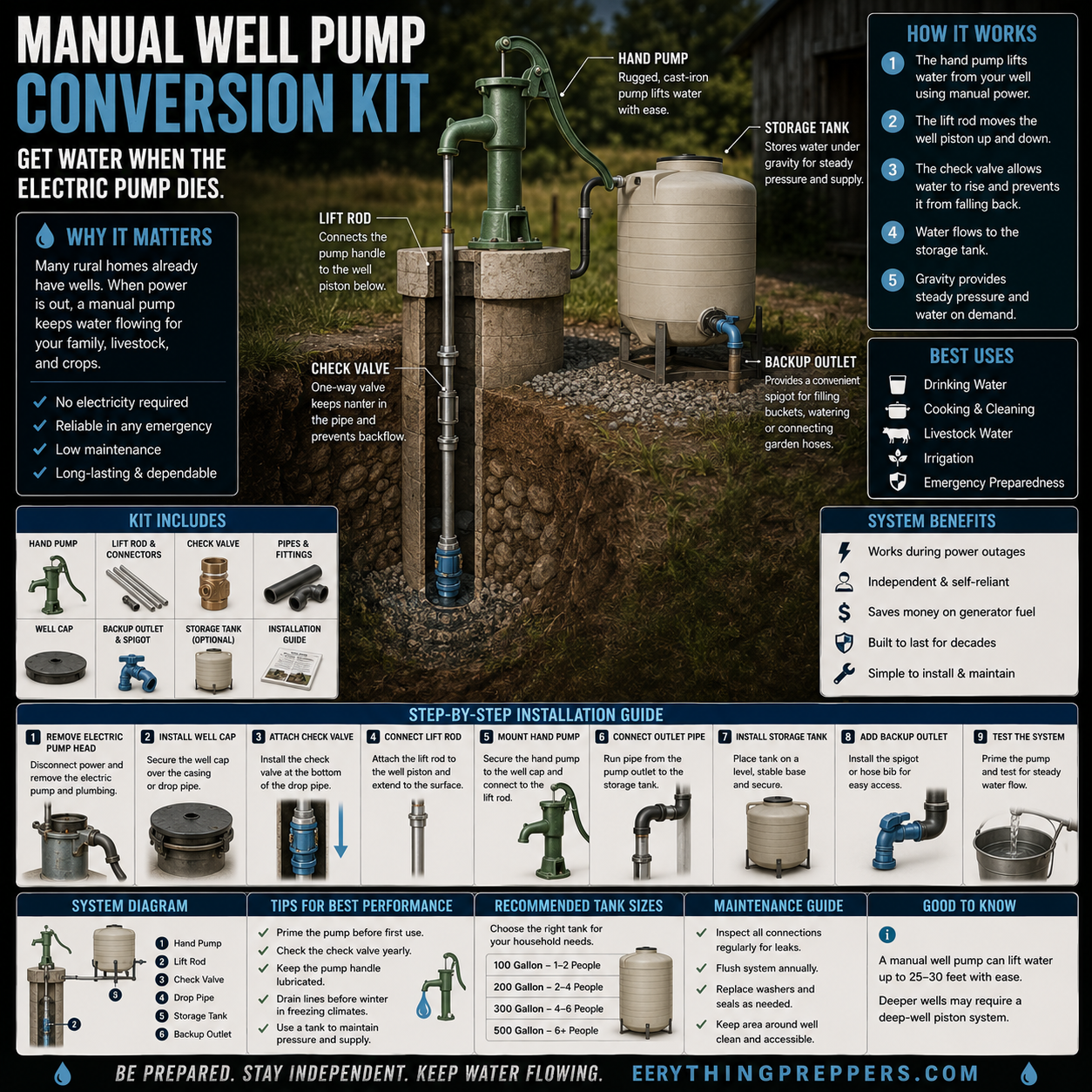
A manual well pump conversion kit is a backup water system that allows a well to be pumped by hand. The kit usually includes a hand pump, lift rod, check valve, pipe fittings, a well cap, outlet pipe, and sometimes a storage tank or spigot.
When installed correctly, the hand pump lifts water from the well using manual power. The water can be pumped directly into a bucket, into a storage tank, or through a backup outlet for household or outdoor use.
A manual well pump system can be useful for:
- Power outages
- Rural homes
- Cabins
- Farms and homesteads
- Livestock water
- Garden irrigation
- Emergency drinking water access
- Backup water supply planning
The main benefit is independence. If your electric pump fails, you still have a way to move water.
How a Manual Well Pump Works
A manual well pump works by moving water upward through a pipe using a piston, lift rod, and check valve.
Here is the basic process:
1. The Hand Pump Lifts Water
When you move the pump handle, it creates mechanical movement inside the pump system. That movement helps lift water from the well.
2. The Lift Rod Moves the Piston
The lift rod connects the pump handle to the lower pump mechanism. As the handle moves, the rod moves the piston up and down.
3. The Check Valve Holds Water in the Pipe
A check valve allows water to rise while preventing it from flowing backward into the well. This makes pumping more efficient.
4. Water Flows to a Storage Tank or Spigot
Once water reaches the surface, it can flow into a bucket, pipe, tank, or backup outlet.
5. Gravity Can Provide Simple Storage Pressure
If water is pumped into an elevated storage tank, gravity can help provide a steady flow for basic use.
This system is simple, but depth matters. Shallow wells are easier to pump manually. Deeper wells may require a special deep-well hand pump system.
Important Water Safety Warning
Well water should be treated as a serious household water source. Installing a manual pump can affect plumbing, sanitation, and water quality if done incorrectly.
Before using water for drinking:
- Test your well water regularly.
- Keep the well cap sealed and sanitary.
- Use potable-water-safe pipes and fittings.
- Do not allow dirty tools or fittings to enter the well.
- Disinfect the system after installation if needed.
- Keep surface water, animals, chemicals, and waste away from the wellhead.
- Follow local well and plumbing codes.
- Hire a licensed well professional if you are unsure.
A manual pump helps you access water, but it does not automatically make contaminated water safe to drink.
What Comes in a Manual Pump Conversion Kit?
A basic kit may include several parts.
Hand Pump
The hand pump is the visible pump mounted above the well. Cast-iron pumps are common for shallow wells and simple outdoor setups.
Lift Rod and Connectors
The lift rod connects the handle mechanism to the piston or lower pump components.
Check Valve
The check valve helps water rise and prevents backflow.
Pipes and Fittings
Pipes carry water from the well to the pump or tank. Use potable-water-rated materials.
Well Cap
The well cap protects the top of the well and helps keep debris, insects, and contamination out.
Backup Outlet or Spigot
A spigot allows easy filling of buckets, hoses, or containers.
Storage Tank
An optional tank stores pumped water for later use. If elevated, it can provide simple gravity-fed flow.
Installation Guide
A good kit should include instructions matched to the pump type and well setup.
Before You Begin: Know Your Well
Not every hand pump works with every well. Before buying or installing a conversion kit, gather basic information about your well.
Important details include:
- Well depth
- Static water level
- Casing diameter
- Existing electric pump type
- Well cap style
- Pipe size
- Local plumbing rules
- Whether the well is shallow or deep
- Whether the system is pressurized
Many simple manual pumps can only lift water from shallow depths. A common shallow hand pump may work around 25 to 30 feet under ideal conditions. Deeper wells usually need a deep-well piston pump or specialized manual system.
If you do not know your well depth or static water level, ask a well professional.
Step-by-Step Installation Guide
Step 1: Remove or Isolate the Electric Pump Head
Before working near any electric pump or wiring, disconnect power safely. If your existing well system has electrical components, turn off the correct breaker and confirm the system is not energized.
In many setups, you do not fully remove the electric pump. Instead, the manual system may be added separately or installed through a compatible well cap.
Do not cut, disconnect, or alter well wiring unless you are qualified. When in doubt, hire a professional.
Step 2: Install the Well Cap
Install a sanitary well cap or compatible pump cap over the casing. The cap should fit securely and help keep insects, debris, and surface water out.
A poor well cap can allow contamination into the well. This is especially important if the water may be used for drinking, cooking, or washing dishes.
Check that the cap allows proper routing for the manual pump pipe or lift rod without leaving open gaps.
Step 3: Attach the Check Valve
Install the check valve at the correct location according to the pump design. The check valve allows water to rise but prevents it from falling back when the pump handle stops.
Make sure the valve is installed in the correct direction. Many check valves have an arrow showing flow direction.
A backward check valve can stop the system from working.
Step 4: Connect the Lift Rod
Connect the lift rod to the pump mechanism and extend it down to the lower pump assembly if required by your system.
The lift rod should move smoothly without binding. If it rubs, bends, or sticks, pumping will be difficult and parts may wear faster.
Deep-well systems may require multiple rod sections and careful alignment.
Step 5: Mount the Hand Pump
Mount the hand pump securely to the well cap, platform, or pump base. It should not wobble when the handle is used.
A hand pump creates repeated force during operation, so the mounting surface must be strong and stable.
Check:
- Pump alignment
- Handle clearance
- Bolt tightness
- Outlet direction
- Room for bucket filling
- Safe footing around the pump
Keep the pump accessible year-round.
Step 6: Connect the Outlet Pipe
Connect the pump outlet to a spigot, short pipe, hose bib, or storage tank line. The outlet should allow water to be collected easily without splashing mud or draining back toward the wellhead.
If connecting to a storage tank, make sure the tank is food-grade if water is intended for drinking or cooking.
Add shut-off valves where needed for maintenance.
Step 7: Install the Storage Tank
An optional storage tank can make the system more useful. Instead of pumping only one bucket at a time, you can fill a tank and use gravity for steady water access.
Place the tank on a level, stable base. Secure it so it cannot tip or shift when full.
Choose tank size based on household needs. Example sizing may include:
- 100 gallons for 1–2 people
- 200 gallons for 2–4 people
- 300 gallons for 4–6 people
- 500 gallons for 6+ people
These are only planning examples. Actual needs depend on climate, livestock, cooking, hygiene, and how long you expect to rely on the system.
Step 8: Add a Backup Outlet
Install a backup spigot, hose bib, or fill outlet in a convenient location. This allows easy filling of buckets, watering cans, animal troughs, or garden hoses.
Keep the outlet protected from contamination. Do not let hoses sit in dirty water or animal areas where backflow could become a problem.
If the system connects to household plumbing, backflow prevention and code compliance matter.
Step 9: Test the System
Prime the pump if required. Then pump slowly and watch for steady water flow.
During testing, check:
- Leaks
- Loose fittings
- Smooth handle movement
- Proper check valve function
- Water clarity
- Tank filling
- Spigot flow
- Backflow problems
- Unusual smells or discoloration
After installation, consider testing and disinfecting the well system according to local guidance, especially if anything entered the well during installation.
Best Uses for a Manual Well Pump
A manual well pump can support many practical needs.
Good uses include:
- Drinking water backup
- Cooking water
- Cleaning water
- Livestock water
- Garden irrigation
- Emergency preparedness
- Cabin water supply
- Off-grid homestead use
For drinking and cooking, water quality matters. Use tested and properly handled water.
Tips for Best Performance
Use these tips to keep the system dependable:
- Prime the pump before first use if required.
- Check the check valve yearly.
- Keep the pump handle lubricated.
- Drain lines before winter in freezing climates.
- Use a storage tank to maintain supply.
- Keep the well area clean and accessible.
- Protect the pump from weather when possible.
- Test the system before emergency season.
- Keep spare washers and seals available.
A manual pump should be used and tested occasionally. Waiting until an emergency to test it is a mistake.
Maintenance Guide
A simple maintenance routine can keep the pump ready.
Check regularly for:
- Leaks around fittings
- Worn washers
- Loose bolts
- Rust or corrosion
- Stiff handle movement
- Cracked pipes
- Damaged well cap
- Contamination near the wellhead
- Tank algae or sediment
Suggested tasks:
- Flush the system annually.
- Inspect connections after freezing weather.
- Replace seals as needed.
- Clean the spigot area.
- Test water quality regularly.
- Keep the pump covered if exposed to harsh weather.
If water output suddenly drops, the problem may be a worn seal, clogged pipe, failing check valve, low water level, or pump depth issue.
Common Mistakes to Avoid
Mistake 1: Buying the Wrong Pump for Well Depth
Shallow pumps cannot lift from deep wells. Know your static water level before buying a pump.
Mistake 2: Leaving the Wellhead Unsealed
An open or poorly sealed wellhead can allow contamination. Use a proper cap and fittings.
Mistake 3: Skipping Water Testing
Clear water is not always safe water. Test well water regularly.
Mistake 4: Ignoring Freezing Weather
Water in pipes can freeze and crack parts. Drain or protect lines in cold climates.
Mistake 5: Using Non-Potable Materials
Use potable-water-safe materials for drinking-water systems.
Mistake 6: Forgetting Backflow Prevention
Hoses and tanks can create contamination risks if water flows backward. Use proper backflow protection where needed.
Safety Notes
Water systems should be installed carefully.
Follow these safety rules:
- Disconnect power before working near electric pumps.
- Do not alter wiring unless qualified.
- Keep the well cap sealed.
- Use potable-water-rated materials.
- Test water before drinking.
- Keep animals, chemicals, fuel, and waste away from the wellhead.
- Protect the pump from freezing.
- Keep children away from open well components.
- Follow local well and plumbing codes.
- Hire a well professional when unsure.
If the well has been flooded, do not drink the water until it has been inspected, disinfected, and tested.
Output and System Benefits
A manual well pump conversion can provide:
- Water access during power outages
- More independence from generators
- Lower fuel dependence
- Emergency drinking-water backup
- Livestock and garden support
- Long-lasting low-maintenance water access
- A dependable homestead backup system
For rural homes, this can be one of the most important preparedness upgrades because water affects nearly every part of daily life.
Final Thoughts
A manual well pump conversion kit is a practical backup for homes and properties that rely on electric well pumps. When the power fails, a hand pump can keep water moving for drinking, cooking, cleaning, livestock, and garden use.
The system works by using manual power, a lift rod, check valve, pipes, and a pump to bring water to the surface. An optional storage tank and backup outlet make the setup even more useful.
The most important step is choosing the right pump for your well depth and installing it safely. Keep the well sealed, use potable-water-safe materials, test the water, and maintain the pump before emergencies happen.
Be prepared. Stay independent. Keep water flowing.
Frequently Asked Questions
Can a manual pump work on any well?
No. It depends on well depth, static water level, casing size, and pump type. Deep wells usually need a special deep-well hand pump system.
How deep can a hand pump lift water?
Many shallow hand pumps work around 25–30 feet under ideal conditions. Deeper wells need a different piston-style deep-well system.
Can I keep my electric pump and add a hand pump?
In some setups, yes. Some systems allow a backup hand pump to be installed alongside existing equipment, but compatibility depends on the well and cap design.
Is the water safe to drink?
Only if the well water is safe and tested. A manual pump moves water, but it does not purify it.
Do I need a storage tank?
No, but a storage tank makes the system more useful. You can pump water in batches and use gravity-fed flow later.
What maintenance does a hand pump need?
Inspect seals, washers, fittings, handle movement, and the check valve regularly. Lubricate moving parts if recommended by the manufacturer.
What happens in freezing weather?
Water can freeze inside pipes and damage the system. Drain lines or winterize the pump if freezing temperatures are possible.
Should I hire a professional?
If you are unsure about well depth, plumbing, sanitation, wiring, or local codes, hiring a licensed well professional is the safest choice.