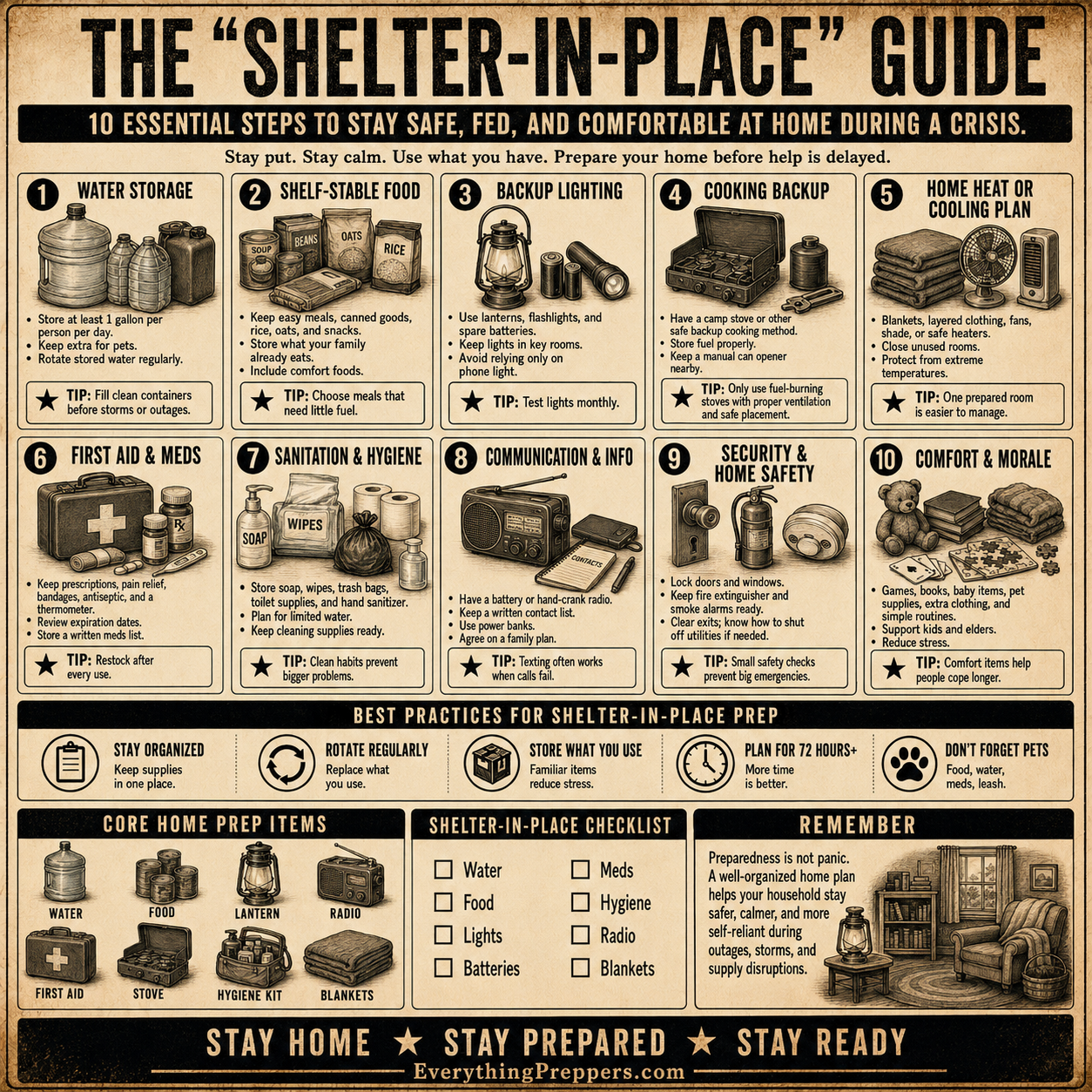
Not every emergency means you need to leave home. In many storms, power outages, supply disruptions, public safety alerts, or short-term local emergencies, the safest option may be to stay indoors and use the supplies you already have.
This is called sheltering in place.
Sheltering in place means staying where you are, reducing exposure to outside hazards, and using a simple home plan to keep your household safe, fed, informed, and as comfortable as possible. It does not need to be extreme or complicated. The goal is calm preparation, not panic.
This guide covers 10 essential shelter-in-place steps every household should think through before an emergency happens.
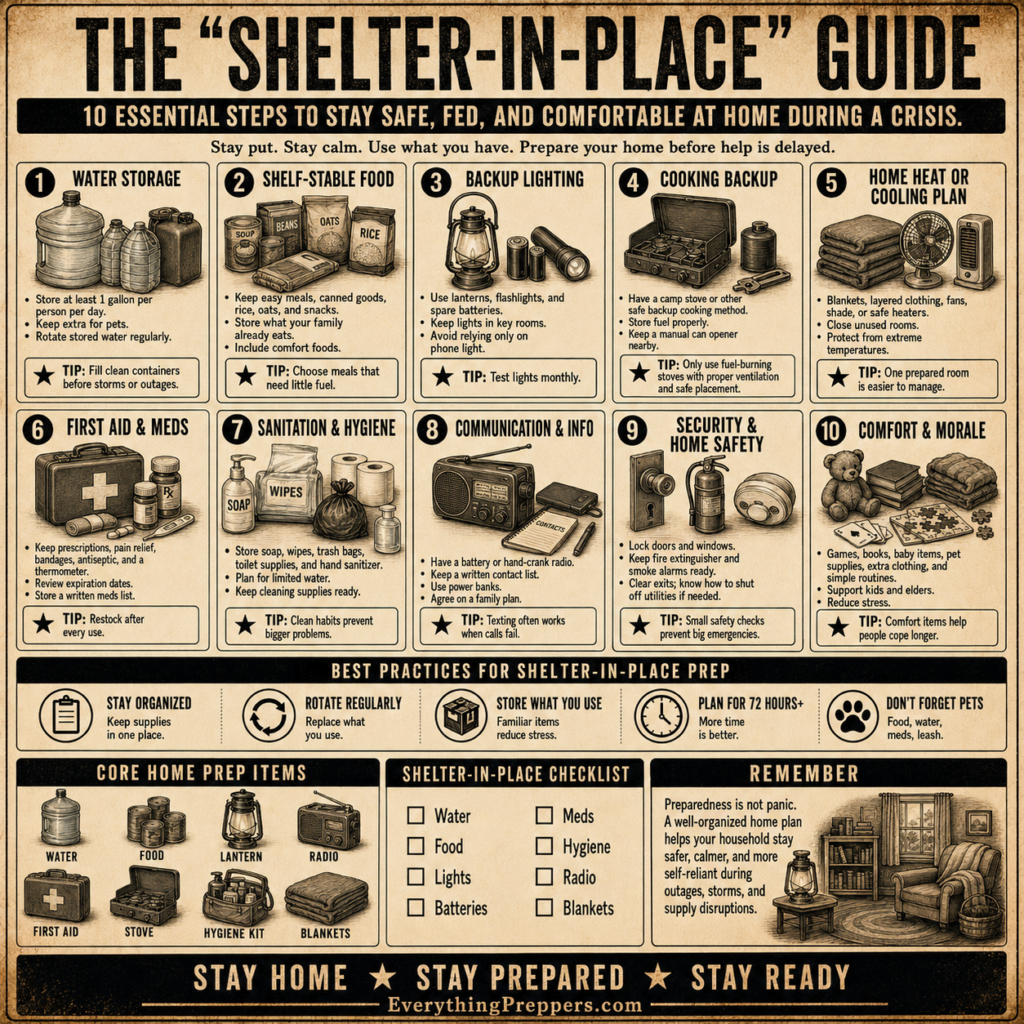
What Does “Shelter in Place” Mean?
Shelter in place means staying inside a safe indoor location instead of leaving immediately. This may be recommended during certain weather events, local hazards, temporary lockdowns, power outages, or other situations where going outside could create more risk.
In a home preparedness context, sheltering in place usually means having enough basic supplies to safely stay home for at least a few days.
A good shelter-in-place plan should cover:
- Water
- Food
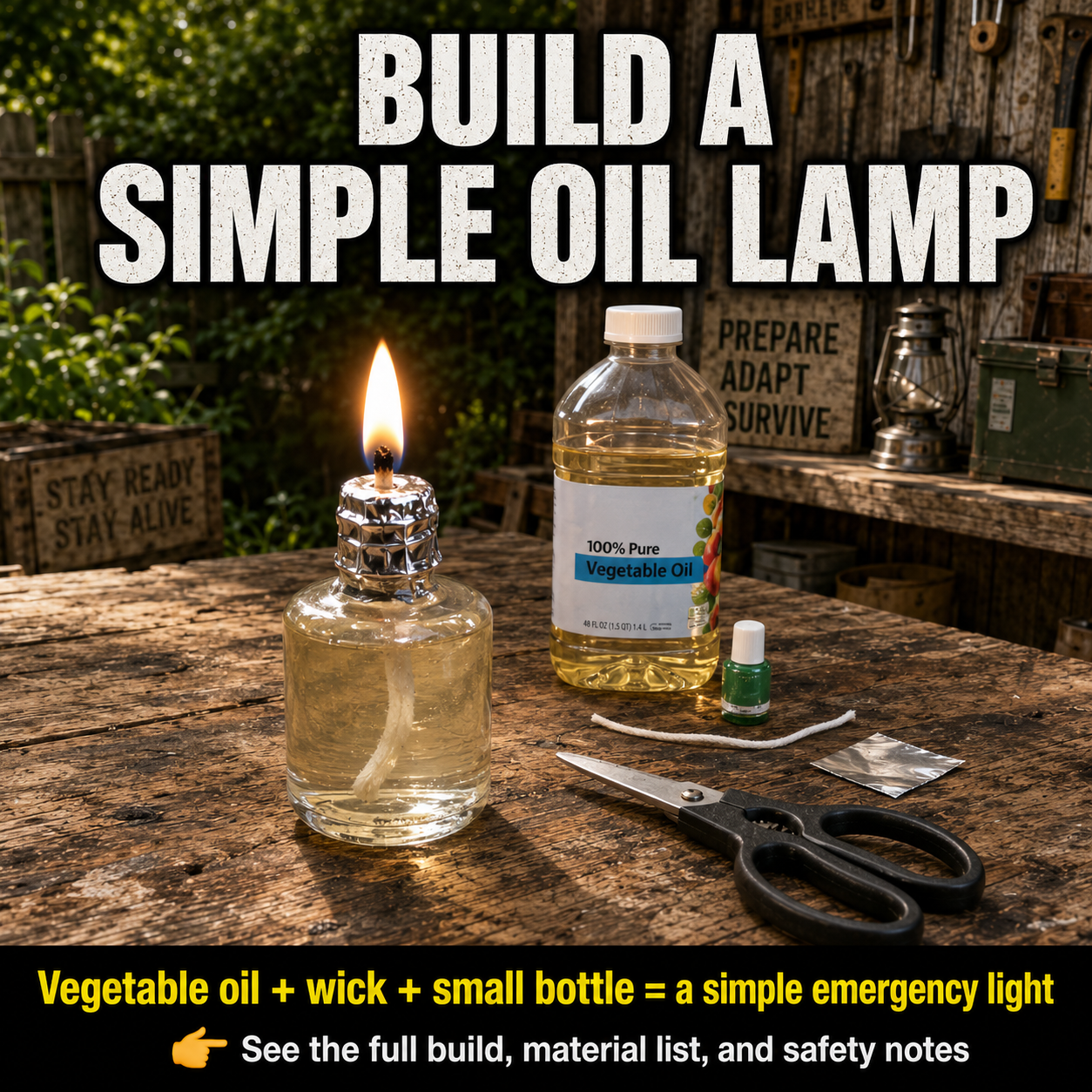
- Lighting
- Cooking backup
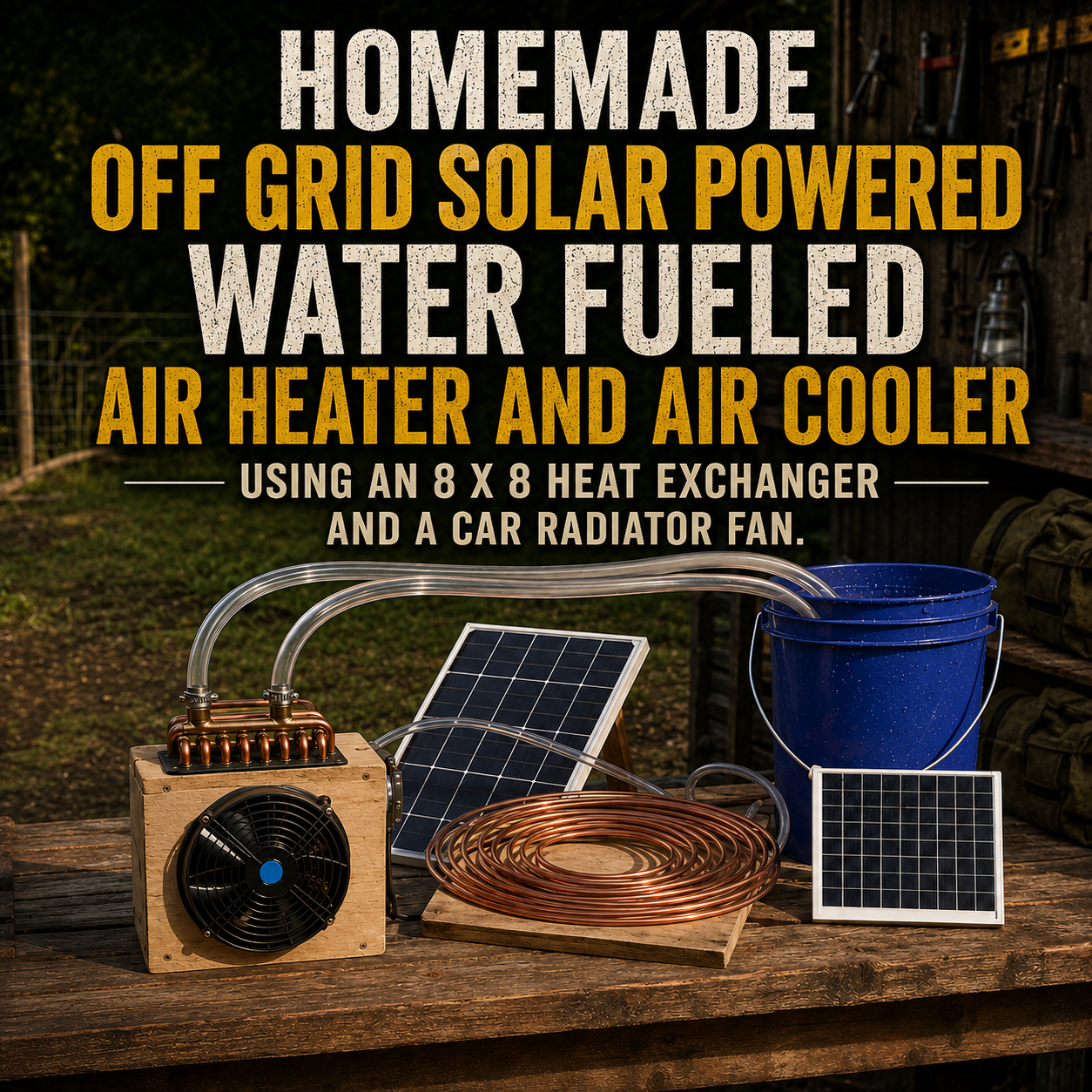
- Heating or cooling
- First aid and medications
- Sanitation and hygiene
- Communication
- Home safety
- Comfort and morale
The best plan is simple, organized, and realistic for your household.
1. Store Enough Water
Water should be one of the first priorities in any shelter-in-place plan. A common emergency planning guideline is to store at least one gallon of water per person per day for drinking and basic hygiene.
If you have pets, store extra water for them too.
Water storage tips:
- Store clean drinking water in safe containers.
- Keep water in a cool, dark place.
- Rotate stored water regularly.
- Fill clean containers before expected storms or outages.
- Keep some smaller bottles for easy carrying.
- Do not rely only on one large container.
A mix of large containers and smaller bottles works well. Large containers store more water efficiently, while smaller bottles are easier to move and use.
2. Keep Shelf-Stable Food
During an emergency, simple meals are better than complicated cooking plans. Focus on shelf-stable foods your family already eats.
Good options include:
- Canned soups
- Canned beans
- Rice
- Oats
- Pasta
- Peanut butter
- Crackers
- Canned vegetables
- Canned fruit
- Shelf-stable milk
- Instant meals
- Comfort snacks
Choose foods that need little water, little fuel, and minimal preparation. If the power is out, you may not want to spend time cooking complicated meals.
Also keep a manual can opener. It is a small item, but it matters when your food supply depends on canned goods.
3. Prepare Backup Lighting
Good lighting makes a home safer during a power outage. It helps prevent falls, makes cooking easier, and reduces stress at night.
Useful lighting supplies include:
- LED lanterns
- Flashlights
- Headlamps
- Spare batteries
- Rechargeable lights
- Solar lanterns
- Battery banks
Place lights in key areas such as bedrooms, kitchen, bathroom, and hallways. Test them monthly so you know they work before an emergency.
Avoid relying only on your phone flashlight. A phone should be saved for communication, updates, and emergency calls.
4. Have a Safe Cooking Backup
If the power goes out, you may need another safe way to heat food or boil water. The best option depends on your home, fuel storage rules, climate, and cooking habits.
Common backup cooking options include:
- Camp stove
- Butane stove
- Propane stove
- Outdoor grill
- Solar cooker
- Thermal cooker or hot box
- Ready-to-eat meals
Important safety note: fuel-burning stoves should only be used with proper ventilation and safe placement. Never use outdoor grills, charcoal burners, or gas camping stoves inside enclosed living spaces unless the device is specifically rated for indoor use and you understand the safety requirements.
Keep fuel stored properly, away from heat, flames, and living areas where required by local rules.
5. Make a Heat or Cooling Plan
Temperature can become a serious issue during extended outages. Your plan should match your climate.
For cold weather, prepare:
- Blankets
- Layered clothing
- Warm socks
- Sleeping bags
- Window insulation
- Draft blockers
- One smaller room to keep warm
For hot weather, prepare:
- Battery fans
- Shaded windows
- Light clothing
- Extra drinking water
- Cool cloths
- Ventilation screens
- A plan to avoid overheating
One prepared room is usually easier to manage than the whole house. Choose a room that is safe, comfortable, and easy to control.
6. Organize First Aid and Medications
A first aid kit is important, but it should also match your household’s real needs.
Basic supplies may include:
- Bandages
- Gauze
- Antiseptic wipes
- Pain relief
- Thermometer
- Tweezers
- Medical tape
- Gloves
- Personal medications
- Prescription information
- Emergency contact list
Review medication expiration dates and refill important prescriptions before storm seasons or travel disruptions when possible.
Keep a written medication list in case your phone is dead or unavailable.
7. Plan for Sanitation and Hygiene
Sanitation becomes very important when water service, trash pickup, or normal routines are disrupted.
Useful hygiene supplies include:
- Soap
- Hand sanitizer
- Wet wipes
- Toilet paper
- Trash bags
- Paper towels
- Disinfecting supplies
- Feminine hygiene products
- Diapers if needed
- Pet waste bags if needed
Clean habits prevent bigger problems. Store enough basic supplies to keep hands, surfaces, and waste under control.
If water is limited, plan how you will wash hands, clean dishes, and manage bathroom needs safely.
8. Stay Connected With Communication and Information
During an emergency, information helps you make better decisions. Do not rely only on internet service or social media.
Useful communication supplies include:
- Battery-powered radio
- Hand-crank radio
- Power banks
- Charging cables
- Written contact list
- Local emergency numbers
- Family meeting plan
- Notebook and pen
Keep important contacts written down. If your phone battery dies or your contacts are not accessible, a paper list can be very helpful.
Agree on a family plan before emergencies happen. Everyone should know where supplies are stored and who to contact if separated.
9. Check Security and Home Safety
Sheltering in place is not only about food and water. Your home also needs to stay safe.
Basic home safety steps include:
- Lock doors and windows.
- Keep exits clear.
- Know how to shut off water if needed.
- Know how to shut off gas if applicable and safe to do so.
- Keep smoke alarms working.
- Keep carbon monoxide alarms working.
- Keep a fire extinguisher accessible.
- Remove trip hazards.
- Keep flashlights near beds.
Small safety checks can prevent bigger emergencies inside the emergency.
Never block required exits with furniture, storage boxes, or heavy emergency supplies.
10. Remember Comfort and Morale
Comfort matters more than people think. During a stressful event, familiar routines and small comfort items can help everyone stay calmer.
Useful comfort items include:
- Books
- Games
- Puzzles
- Baby items
- Pet supplies
- Extra blankets
- Favorite snacks
- Notebooks
- Simple activities for children
- Comfort items for elderly family members
Preparedness is not only about survival. It is also about helping your household cope better during uncertainty.
Simple routines help too. Meals, lights-out time, check-ins, and small tasks can make a difficult situation feel more manageable.
Best Practices for Shelter-in-Place Prep
A good home plan should be easy to use.
Follow these best practices:
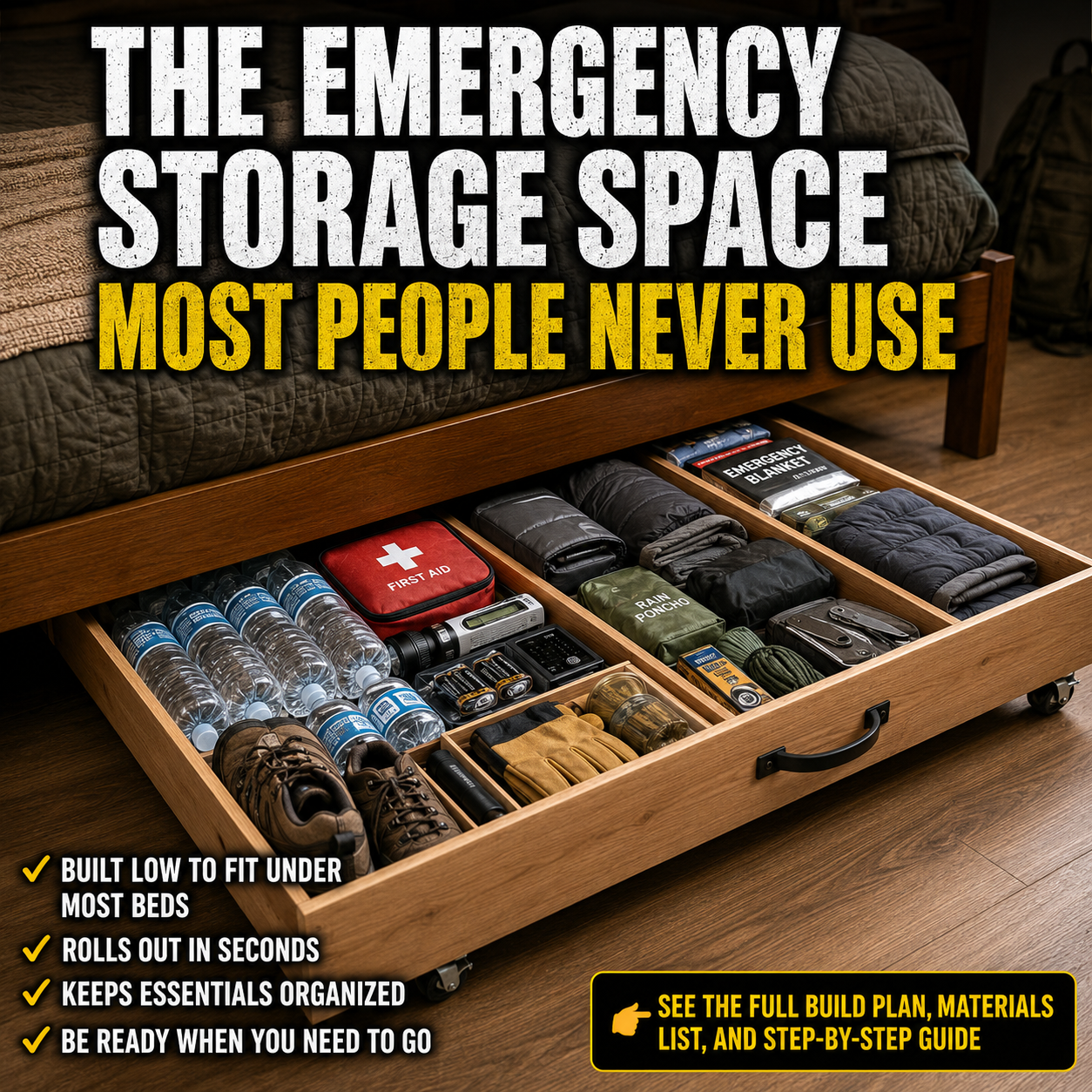
- Keep supplies in one organized location.
- Rotate food and water regularly.
- Store what your household actually uses.
- Plan for at least 72 hours.
- Include pets in your plan.
- Keep a written checklist.
- Test lights, radios, and chargers monthly.
- Restock first aid and hygiene supplies after use.
- Keep emergency exits clear.
- Review your plan before storm season.
Preparedness works best when it becomes part of normal household organization.
Core Home Prep Items
A basic shelter-in-place kit may include:
- Water
- Shelf-stable food
- Lanterns
- Flashlights
- Batteries
- Radio
- First aid kit
- Medications
- Hygiene kit
- Blankets
- Backup cooking supplies
- Power banks
- Manual can opener
- Pet supplies
- Written contact list
You do not need to buy everything at once. Build slowly and focus on the basics first.
Common Mistakes to Avoid
Mistake 1: Buying Food Your Family Does Not Eat
Emergency food should be practical. If your family hates it, it may sit unused and expire.
Mistake 2: Forgetting Water
Food gets more attention, but water is usually more urgent. Store water first.
Mistake 3: Depending Only on Phones
Phones are useful, but batteries die and networks can fail. Keep a radio, written contacts, and backup chargers.
Mistake 4: Blocking Emergency Exits
Do not stack supplies in front of doors, windows, hallways, or escape routes.
Mistake 5: Forgetting Pets
Pets need food, water, medicine, leashes, carriers, and waste supplies.
Mistake 6: Never Testing Gear
A flashlight with dead batteries is not emergency gear. Test important items regularly.
Safety Notes
Sheltering in place should make your household safer, not create new hazards.
Remember:
- Do not use outdoor grills indoors.
- Do not run generators inside or near windows.
- Keep candles away from curtains, bedding, and children.
- Keep fuel stored safely.
- Keep exits clear.
- Use carbon monoxide alarms.
- Follow local emergency instructions.
- Leave if officials order evacuation.
- Do not ignore medical emergencies.
If staying home becomes unsafe, evacuating may be the better choice. A shelter-in-place plan should always include knowing when to leave.
Final Thoughts
Sheltering in place is not about fear. It is about being ready for short-term disruptions without panic. With water, food, lighting, communication, hygiene, first aid, and a simple home safety plan, your household can handle many emergencies more calmly.
Start with the basics. Store water. Build a simple pantry. Keep lights ready. Make a safe cooking plan. Prepare for heat or cold. Write down important contacts. Keep comfort items for kids, elders, and pets.
A well-organized home plan helps you stay safer, calmer, and more self-reliant during outages, storms, and supply disruptions.
Preparedness is not panic. It is simply taking care of your household before help is delayed.
Frequently Asked Questions
How long should I prepare to shelter in place?
A good starting goal is at least 72 hours. If possible, build toward one to two weeks of basic supplies over time.
How much water should I store?
A common guideline is at least one gallon per person per day for drinking and basic hygiene. Store extra for pets, hot weather, or medical needs.
What foods are best for sheltering in place?
Choose shelf-stable foods your family already eats, such as canned meals, rice, oats, beans, pasta, peanut butter, crackers, and simple snacks.
Do I need a generator?
Not always. Many short outages can be managed with lanterns, power banks, shelf-stable food, and safe backup cooking. A generator can help, but it must be used safely outdoors.
Is it safe to cook indoors during a power outage?
Only with appliances that are safe for indoor use and used according to instructions. Never use charcoal grills, outdoor grills, or generators indoors.
Should I use candles for emergency lighting?
Battery-powered lights are safer. Candles create fire risk and should be used only with extreme care.
What should I prepare for pets?
Store pet food, water, medication, leash, carrier, waste bags, and comfort items.
When should I leave instead of sheltering in place?
Leave if authorities order evacuation, if your home becomes unsafe, if floodwater rises, if there is fire danger, or if someone needs urgent medical care.