My neighbors called me selfish for storing rainwater, until a summer water outage hit our town and my elderly father whispered, “Son… someone emptied the barrels.”
That afternoon, one muddy footprint showed me exactly who had done it.
The heat index was 108 degrees when the taps stopped running.
At first, everyone thought it was temporary.
People always think that.
The city posted a short update online saying there had been a major water main failure near the south pumping station. Crews were working on it. Residents should conserve water. More information would come soon.
That was all.
No timeline.
No distribution plan.
No comfort.
Just conserve water.
Within two hours, the grocery store was out of bottled water.
By four o’clock, people were arguing in the parking lot over sports drinks and melted ice.
By sunset, my street had changed.
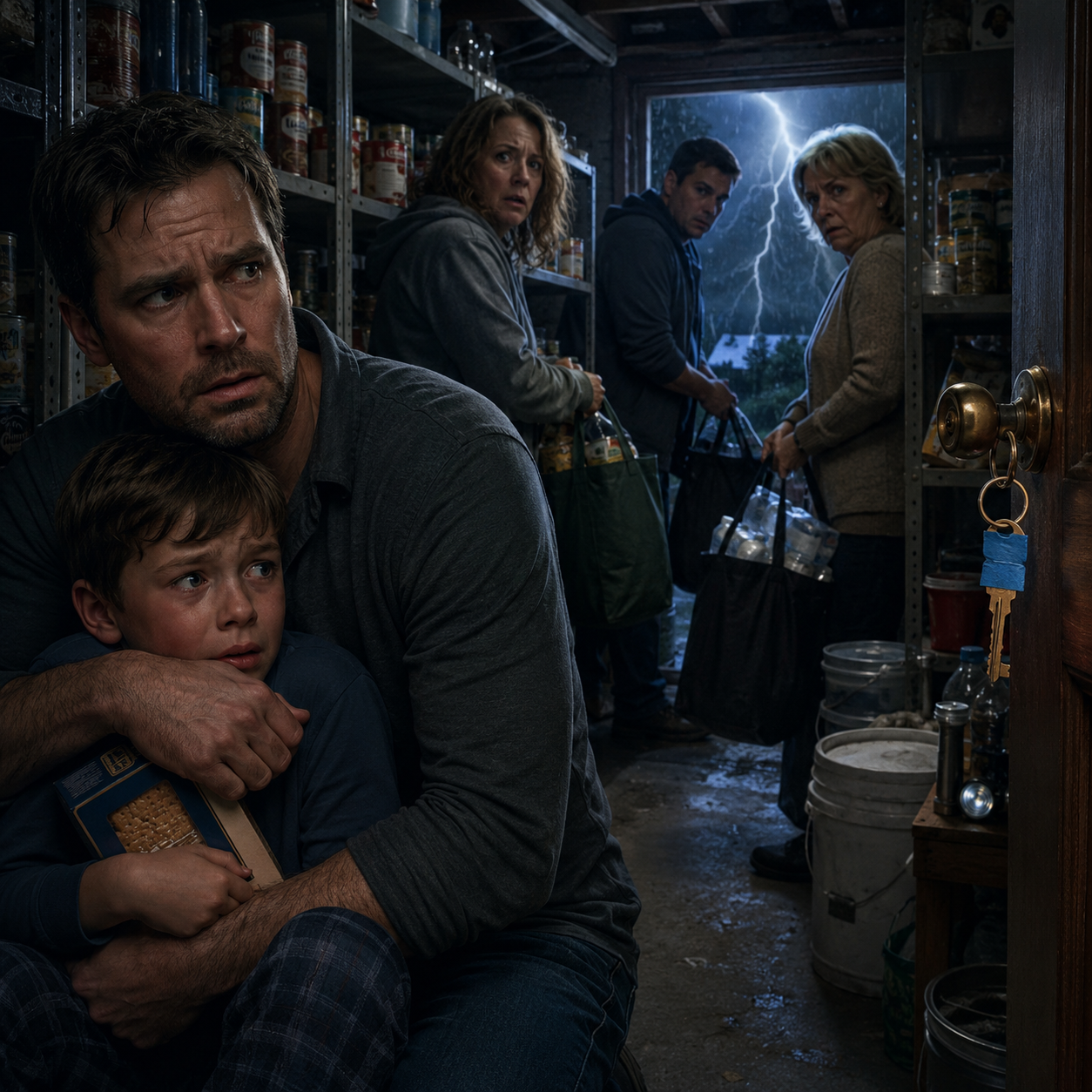
Garage doors were open. Neighbors stood in driveways holding empty jugs. Kids cried because they were thirsty. Adults pretended not to be scared.
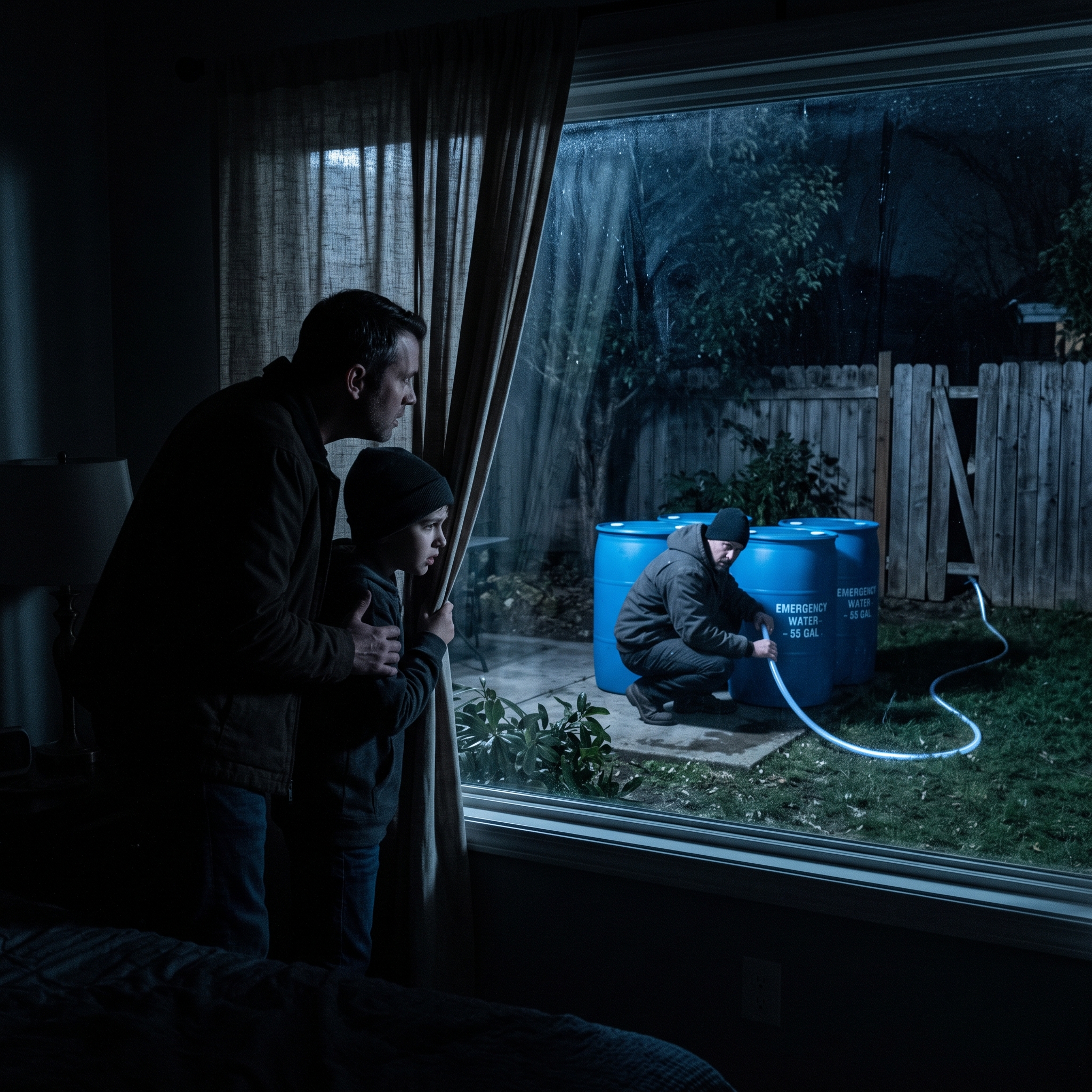
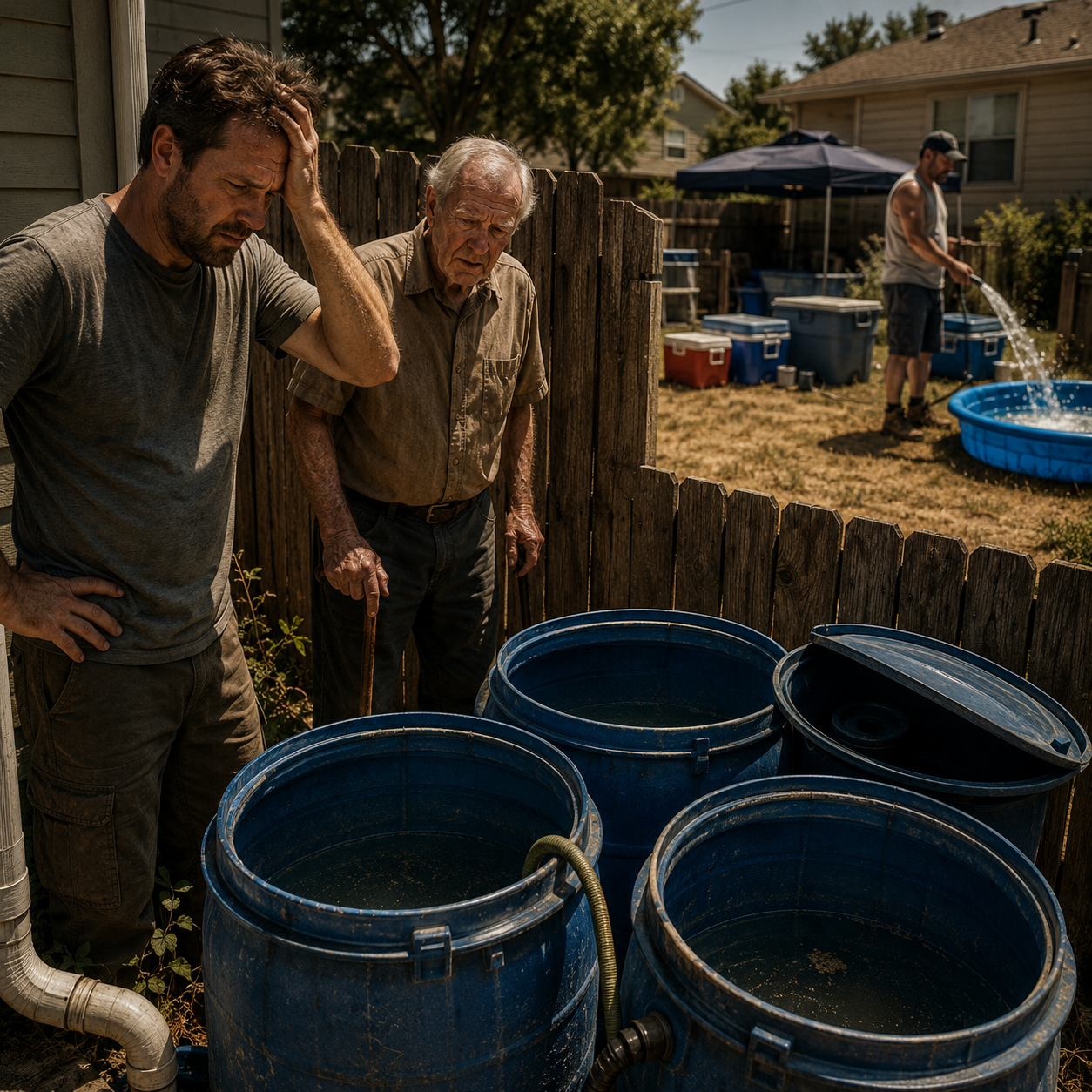
Behind my house, under a shaded lean-to, I had four blue water barrels.
Nothing fancy.
Rain catchment from the shed roof. First-flush diverter. Screened lids. A small hand pump. Labels on every barrel.
NON-DRINKING UNLESS FILTERED AND BOILED.
I had built it after my father moved in with me.
He was seventy-two, stubborn, and diabetic. He needed water for medication, cooling towels, cooking, and hygiene. I wasn’t preparing for the end of the world.
I was preparing for one bad week.
But people had laughed.
My neighbor Craig called the barrels “suburban paranoia.”
His wife once joked, “If things ever get bad, we know where to come.”
I laughed politely then.
I should not have.
That evening, I filled two pots, set aside water for my father’s medicine, and checked the barrels before going inside.
They were full.
By morning, they were almost empty.
My father was the one who found them.
He was standing near the back window, one hand gripping his cane, his face pale with worry.
“Son,” he said quietly, “did you use the water last night?”
I went outside.
The lids were crooked.
The pump hose was dragged across the dirt.
Three barrels were nearly drained.
For a few seconds, I just stood there listening to the cicadas scream in the trees.
Then I saw the footprint.
A muddy shoe print near the shed door.
Large.
Deep heel.
Work boot.
Same tread pattern Craig wore every weekend when he washed his truck in the driveway.
I looked over the fence.
Craig was outside with three coolers, two plastic bins, and a kiddie pool half-filled with water.
His wife was wiping down patio furniture like it was a normal Saturday.
My father came up beside me.
“Maybe don’t start trouble,” he said.
That hurt.
Not because he was wrong.
Because he was tired.
Old people should not have to beg younger people to behave decently during an emergency.
I walked next door.
Craig saw me coming and smiled too quickly.
“Crazy situation, huh?”
I pointed toward the coolers.
“Where did you get the water?”
His smile disappeared.
“Don’t know what you mean.”
“My barrels were emptied last night.”
He laughed.
“Man, everybody’s stressed. Maybe you forgot how much was in there.”
I stared at him.
Behind him, his little boy was splashing water from the kiddie pool onto the grass.
Water my father needed.
Then Craig said the sentence that told me everything.
“Besides, you had more than enough.”
I hadn’t accused him yet.
But he had already defended himself.
I went back home, opened the shed, and checked the small trail camera I used to watch for raccoons.
At 2:13 a.m., Craig climbed over the fence with a flashlight in his mouth and a hose in his hand.
At 2:18, his wife passed empty containers over the fence.
At 2:41, they were still filling them.
At 2:52, Craig looked straight at the camera, froze, and turned it toward the wall.
But he was too late.
The camera had already seen enough.
I saved the clip to my phone.
Then I walked back to his driveway.
This time, half the street was outside.
People were hot, thirsty, irritated, and listening.
Craig raised his voice before I said a word.
“If this is about water, you need to calm down.”
I held up my phone and played the video.
Nobody spoke.
Not his wife.
Not my neighbors.
Not Craig.
The only sound was the video itself: the scrape of containers, the pump handle squeaking, Craig whispering, “Hurry up before he wakes up.”
My father stood beside me, leaning on his cane.
For the first time all morning, Craig looked embarrassed.
Not sorry.
Embarrassed.
That’s an important difference.
He muttered, “We have kids.”
I looked at him.
“So do other people. And my father has medicine.”
His wife started crying.
Maybe from guilt.
Maybe from being caught.
I didn’t care which.
I pointed to the coolers.
“You’re returning what you took.”
Craig opened his mouth.
My father spoke before I could.
“No,” he said, his voice thin but steady. “He’s returning all of it.”
The street went silent.
And something shifted.
One neighbor brought over two sealed gallons from her garage.
Another offered ice from a chest freezer.
A third man said he had a camping filter if we needed it.
By the end of the day, the people who had mocked my water barrels were asking how to build their own.
The outage lasted four days.
Craig never apologized.
But every time he passed my house after that, he looked away from the blue barrels like they had witnessed something shameful.
And in a way, they had.
They had shown exactly what preparedness really means.
It is not fear.
It is not selfishness.
It is responsibility.
And sometimes, it reveals who was only friendly because nothing had gone wrong yet.